What you need to know about the lone star tick
Potential health risks from tick bites have long been known, but recently, one tick in particular — the lone star tick — has been dominating the headlines when it comes to tick-borne illnesses.
Lone star ticks can transmit a variety of diseases to humans, including Rocky Mountain spotted fever, tularemia and ehrlichiosis. What it grabs headline for, however, is that it can cause Alpha-gal syndrome (AGS), which is also called mammalian meat allergy.
In Illinois, the lone star tick is most commonly seen in the southern half of the state, but sightings in the northern portion of the state are sometimes reported, according to the Illinois Department of Public Health (IDPH). It is most active from April through July.
Across the United States, the lone star tick is most common in the Northeast, the South and the Midwest. It is not found west of the Rocky Mountains or in much of the Upper Plains.
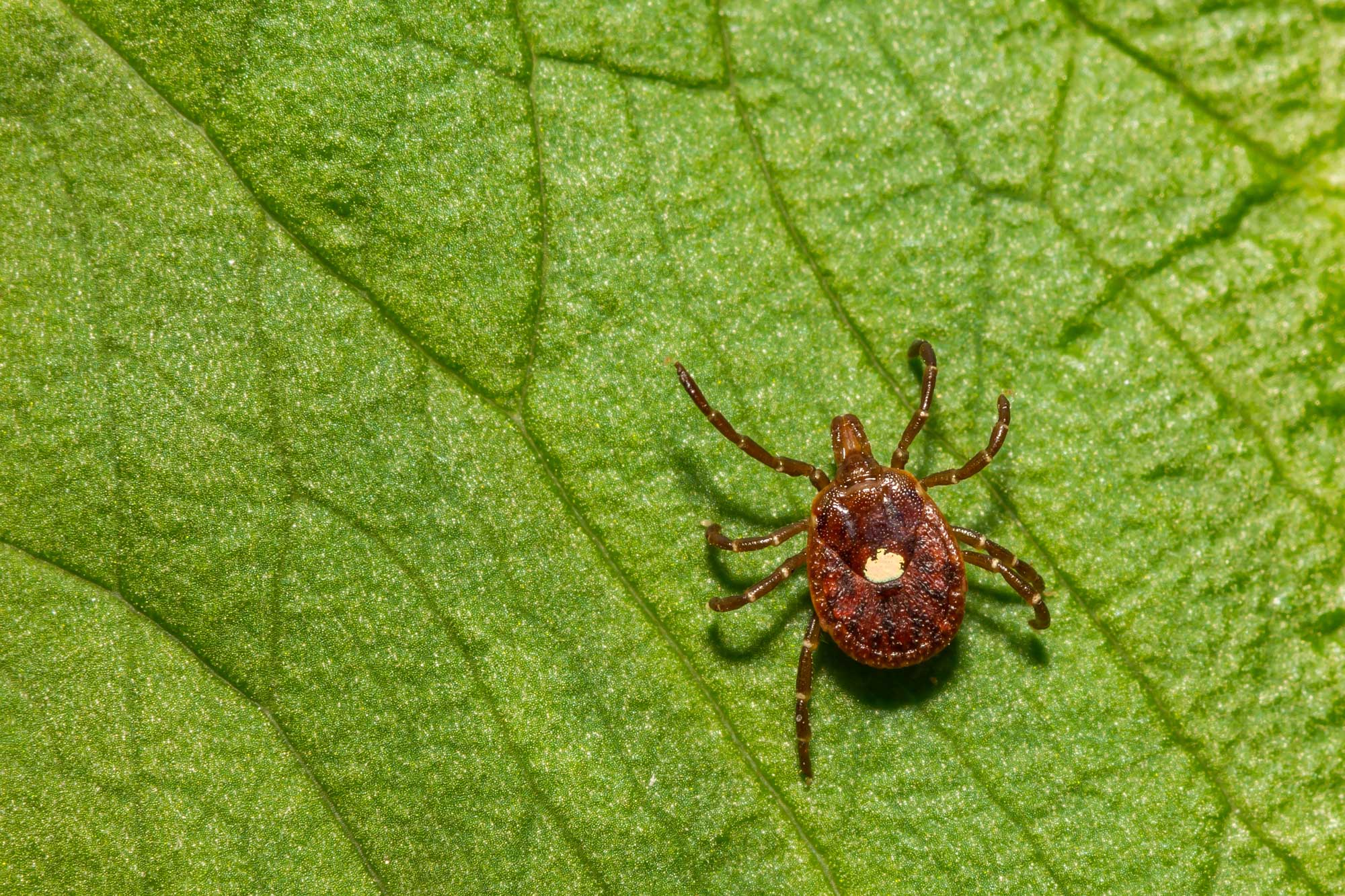
The larvae, nymphs and adults of the lone star tick will feed on humans and other warm-blooded animals, and they are tiny at each stage of their life cycle. The larvae are only about the size of the period at the end of a sentence, IDPH advises. The nymphs are about the size of a pinhead. Lone star nymphs are the form most commonly found on humans.
As adults, lone star ticks are brown in color and measure about 1/8 of an inch long — about the same size as a fruit fly. Because they are similar in appearance, lone star ticks are sometimes confused with deer ticks, also called blacklegged ticks. One key ID feature for lone star ticks is that females have a white spot on the middle of their backs.
Alpha-gal syndrome
Alpha-gal syndrome is a potentially life threatening allergy to red meat that develops when a tick transfers the Alpha-gal molecule from its saliva to a person's blood when it bites, according to the Centers For Disease Control and Prevention (CDC). Once the molecule is in a person's body, the immune system treats it as a threat, triggering a potentially life-threatening allergic reaction.
Because the Alpha-gal molecule is in the bodies of most mammals (but not humans), people who develop AGS cannot eat red meat or other mammal products because of the risk of a serious allergic reaction. The lone star tick is the tick species that most often causes Alpha-gal syndrome, but it has also been known to have been caused by the blacklegged and western blacklegged ticks, the CDC reports.
Not all people who are bitten by affected ticks develop Alpha-gal syndrome, but it is not yet understood why certain people develop the allergy while others do not. The exact number of AGS cases in the United States isn't known, but the CDC estimates it may be as many as 450,000.
Preventing tick bites
The best way to prevent tick-borne disease is to protect yourself against tick bites. To do so, it’s helpful to understand where ticks live and where you may encounter them.
The tick species that are prevalent in Will County and throughout the state, including the lone star tick, live in grasses and shrubs, and not in trees, according to the Illinois Department of Public Health. Ticks move by crawling — they cannot fly or jump — so they typically lie in wait and then quickly move onto a host animal as it moves by.
If you are in areas where ticks are known to be, you should take the following precautions to help avoid bites:
- When walking on paths and trails, avoid brushing against tall grasses and weeds. When possible, leave some space between you and the trail’s edge, but be sure to keep in mind trail safety, etiquette and the fact that other users may be passing on your left.
- Wear protective clothing, such as pants, long-sleeved shirts and boots, and tuck your pant legs into your socks. Light-colored clothing is also helpful because it will be easier to see a tick on lighter-colored clothes than on dark-colored items.
- Use insect and tick repellents containing 10% to 30% DEET, but apply sparingly to exposed skin and avoid sensitive areas. Always follow the label directions when applying repellents.
People who spend time in grassy areas should check their clothes and body every two to three hours to help catch and remove ticks before they bite, the health department advises. Make sure to check children, too, if they've been playing outdoors.
Once arriving home, it’s a good idea to immediately remove and check your clothes, and then launder them. This helps to prevent ticks from getting into your house or on other clothes.
If you do find a tick, remove it immediately. If it’s already embedded itself, use tweezers and apply slow, steady pressure to remove it, not using more force than necessary, IDPH advises. Don’t jerk or twist while pulling because that can cause the tick's mouthparts to break off and remain in the skin.