Five fast facts about fish-loving osprey
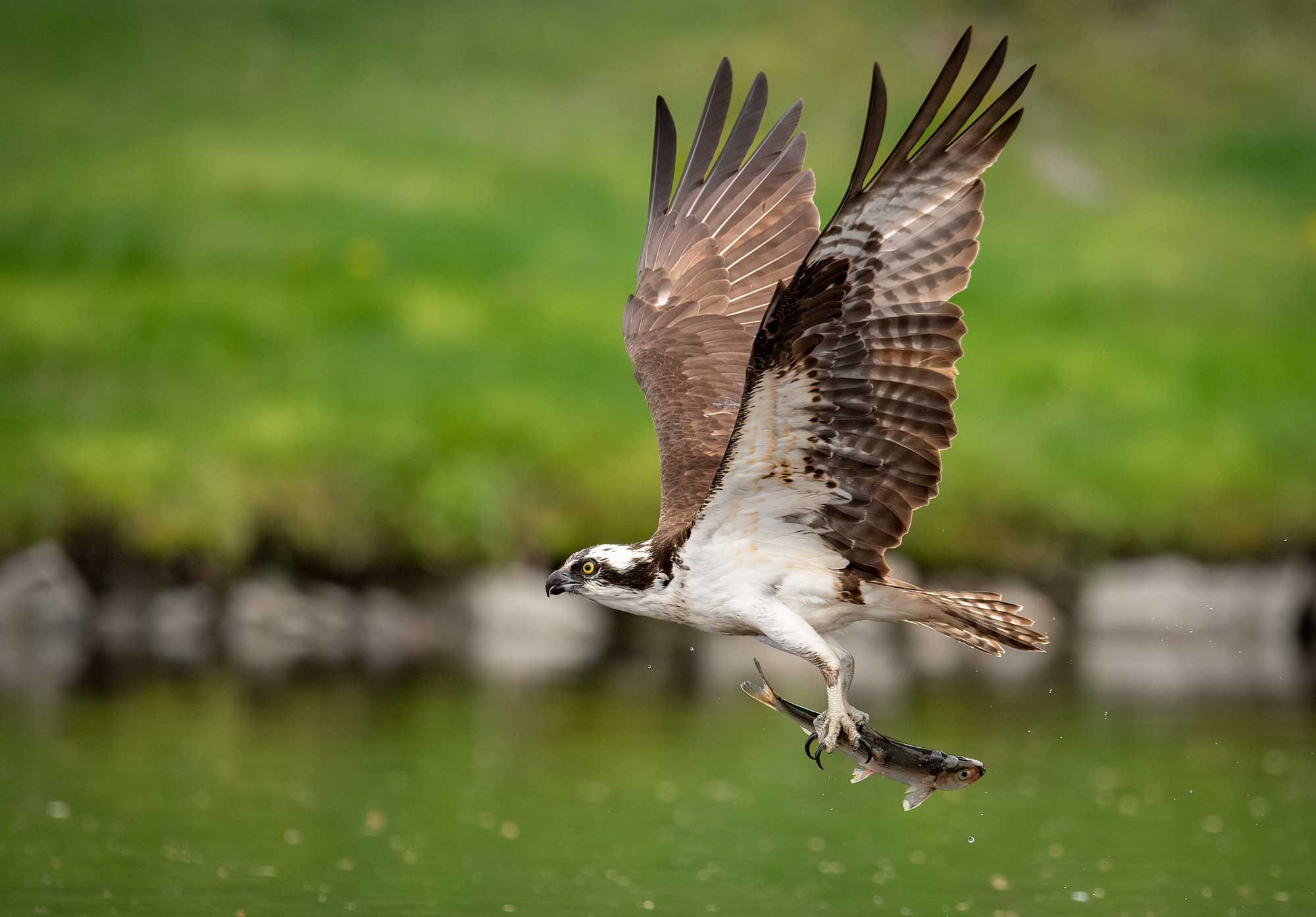
A large bird soaring over a lake, river or ocean could be a bald eagle, but another likely suspect is an osprey, a raptor that is most at home along the world's shorelines.
Ospreys are widespread, living on every continent except Antarctica. Some populations of ospreys migrate, and their journeys can be long. The ospreys that spend the breeding season in North America travel to South America for winter. Over the course of their 15 to 20-year lifespan, the birds may fly as far as 160,000 miles during their migrations, according to the Cornell Lab of Ornithology.
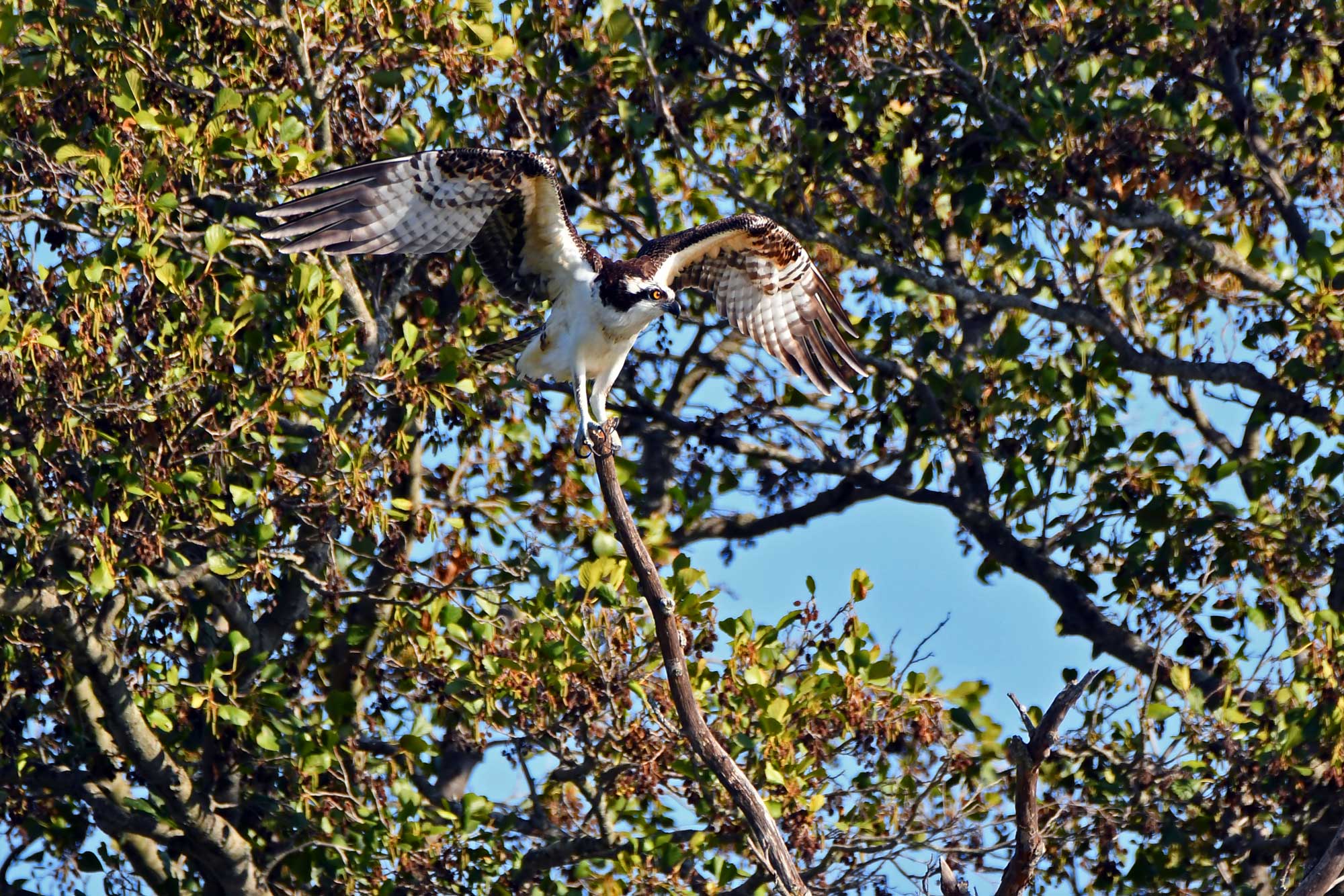
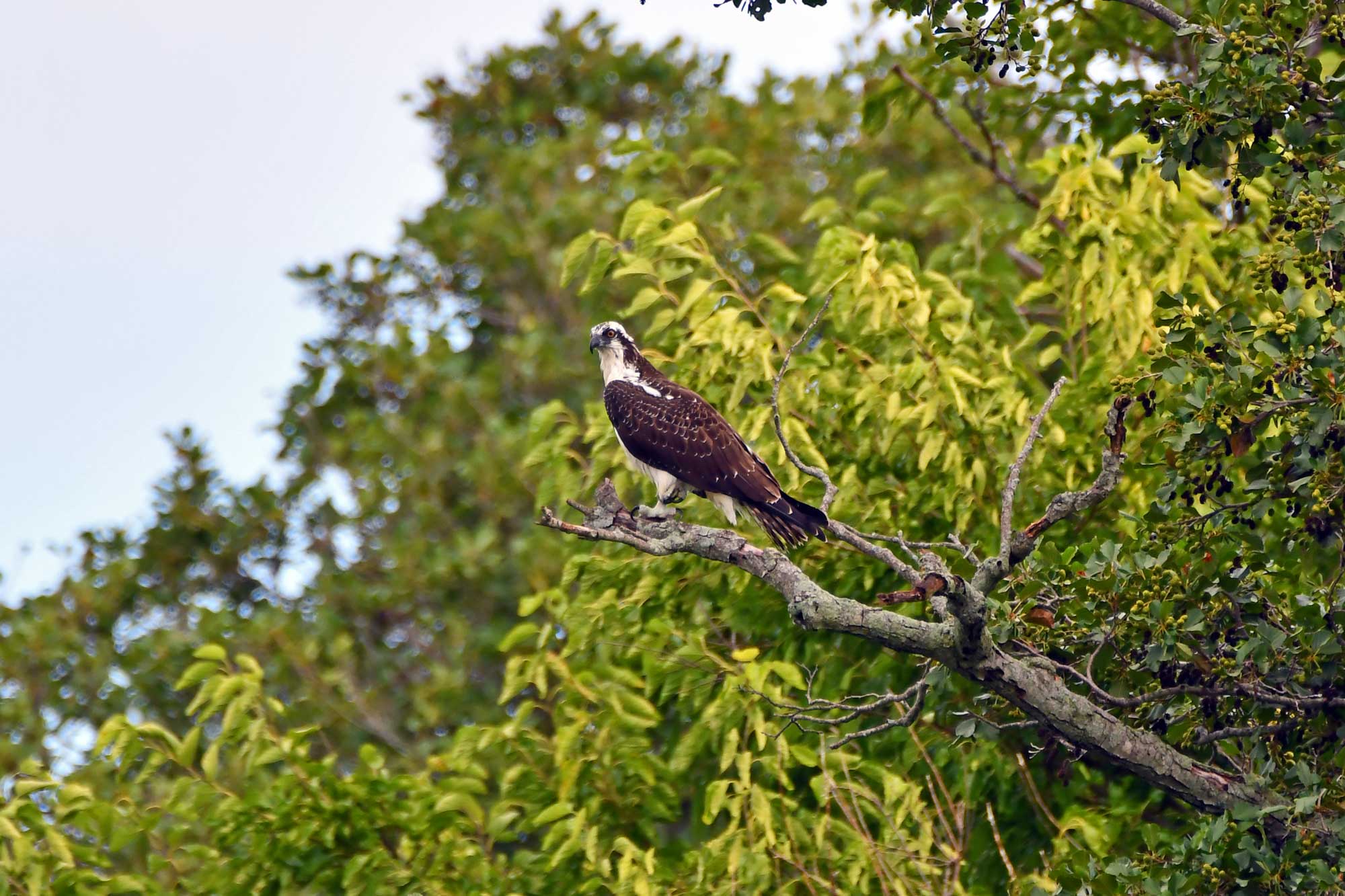
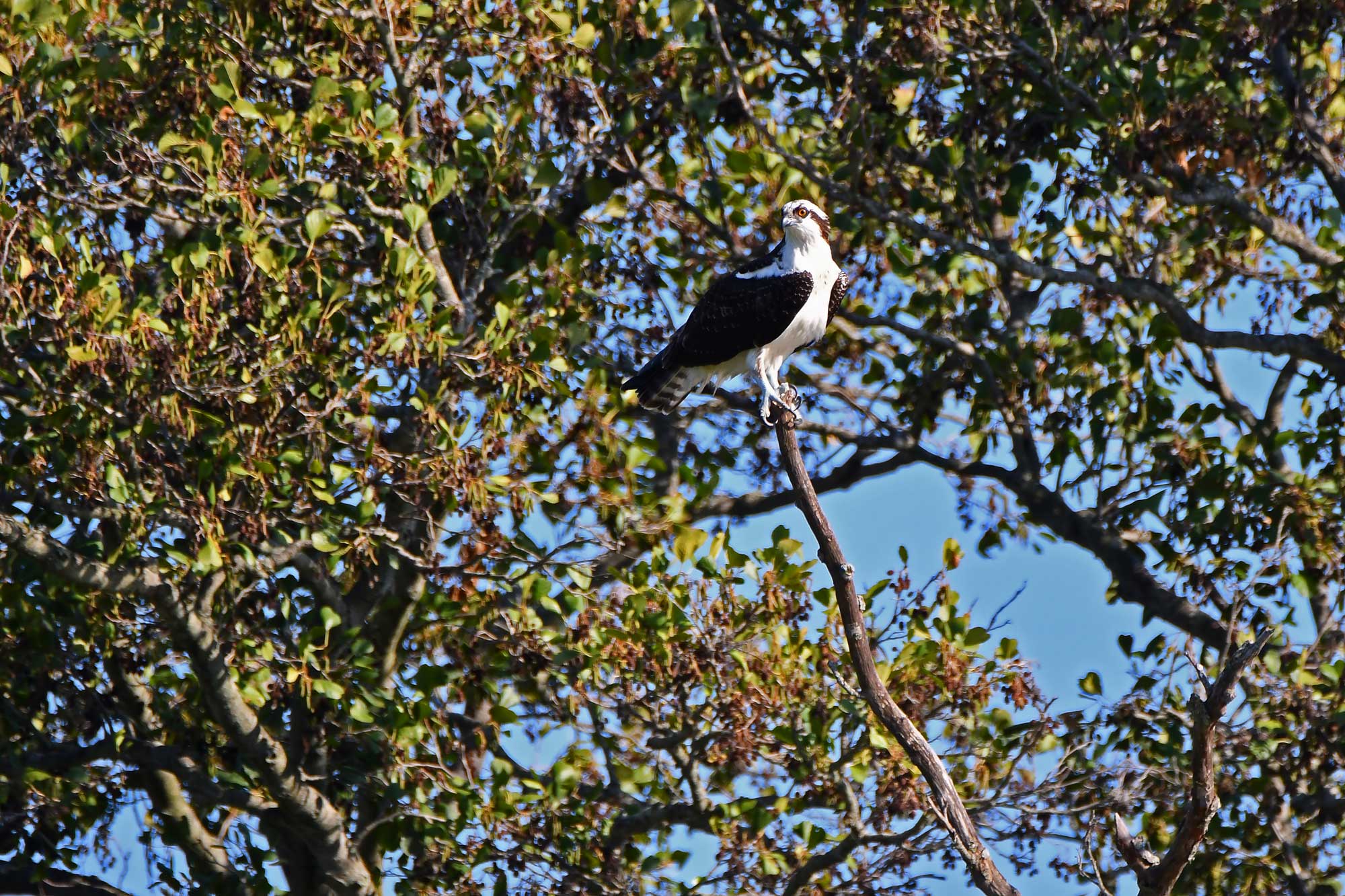
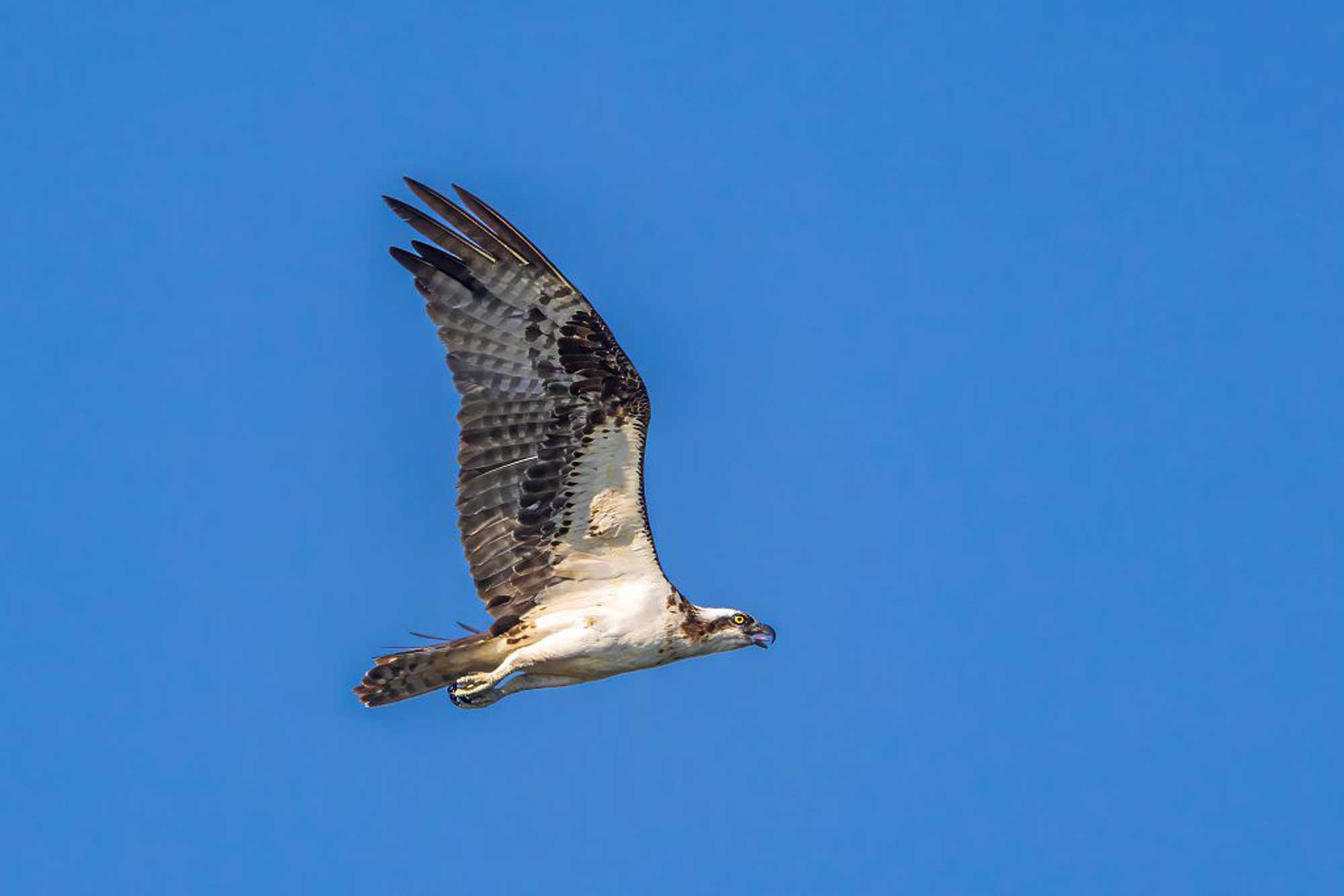
These birds, dark brown from above with white underparts, are sometimes called seahawks because of their preference for being near water and their preferred diet of fish (more on that later). Look for them soaring above area waterways, chirping and calling in flight.
They are sometimes mistaken for bald eagles
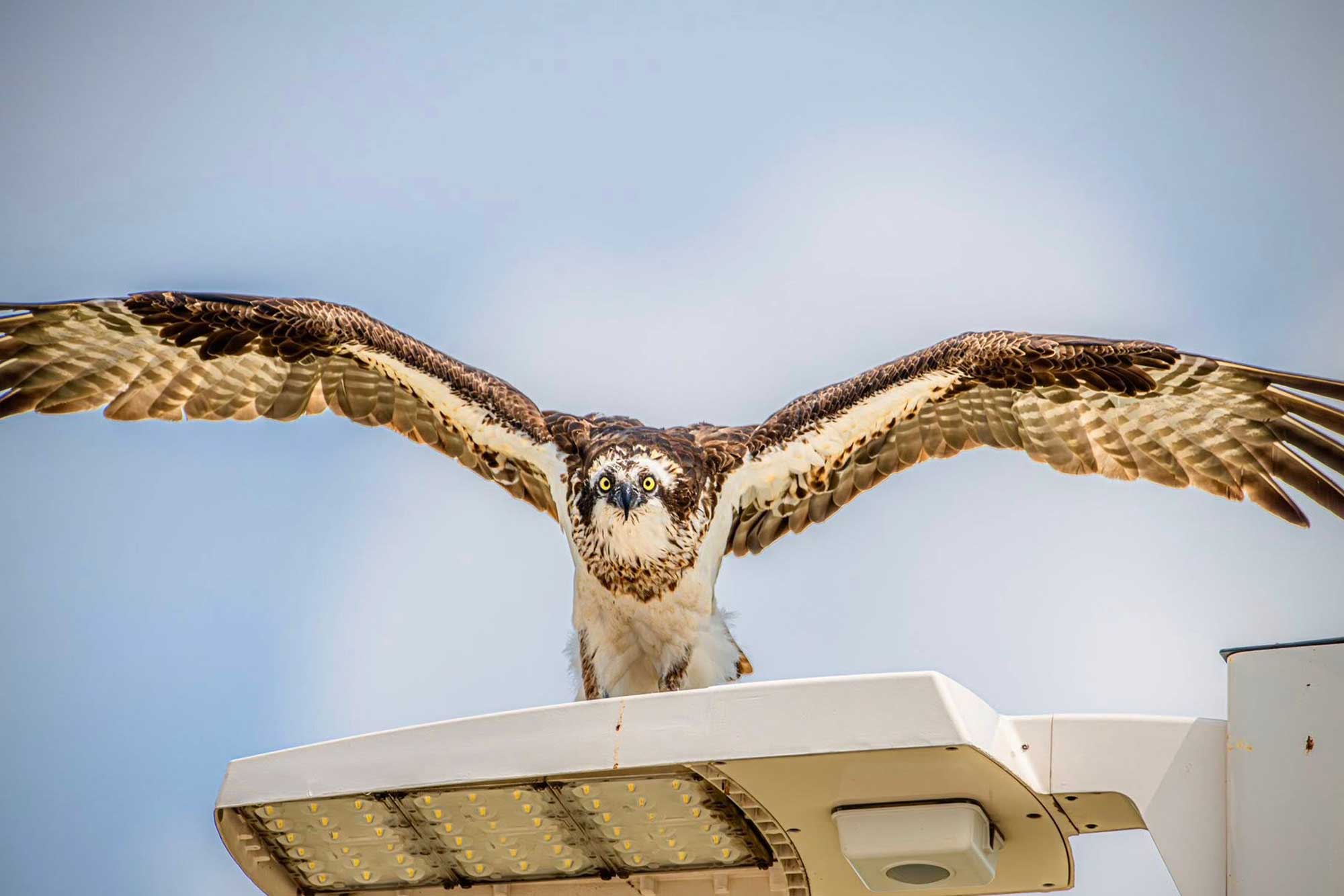
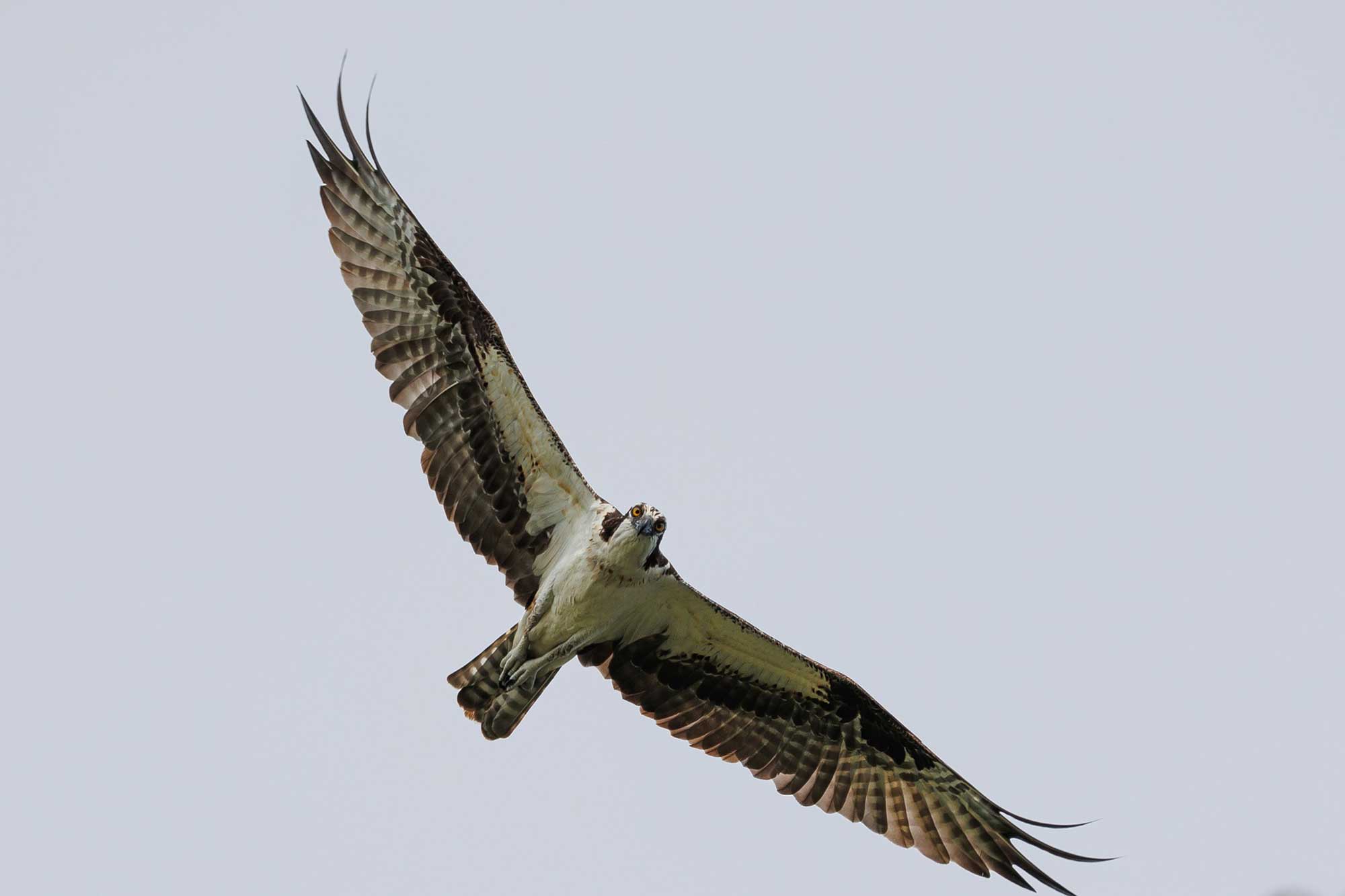
Ospreys are often mistaken for bald eagles, particularly juvenile eagles that have not yet achieved their trademark appearance with a stark white head and bold yellow beak and legs. There are some key differences in appearance, however. To start, ospreys are white underneath, whereas eagles are dark colored. Ospreys are also considerably smaller than bald eagles. Ospreys have a wingspan of about 5 feet to 5 1/2 feet, while a bald eagle's wingspan can be between 6 feet and 7 1/2 feet, according to the Indiana Department of Natural Resources.
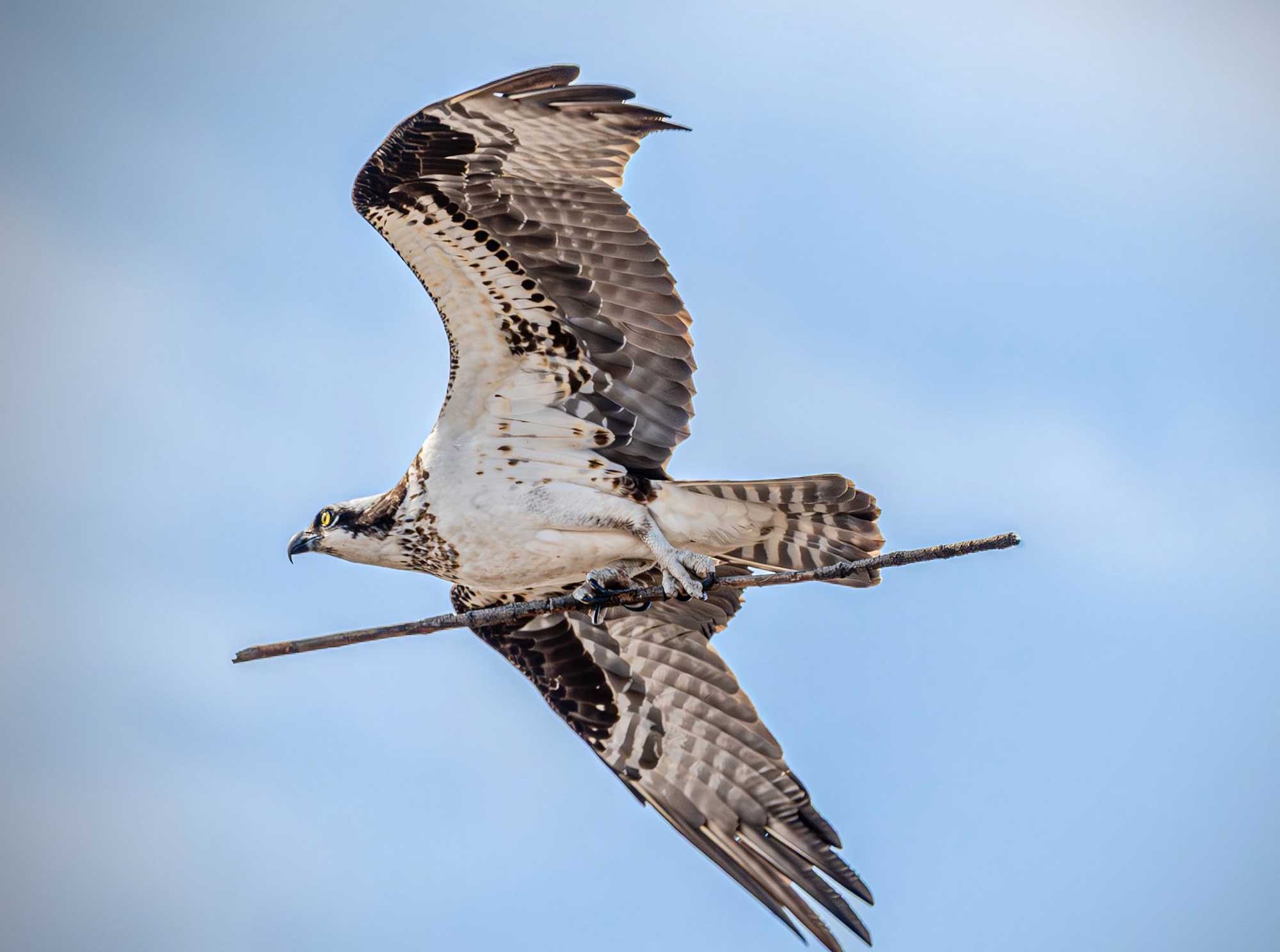
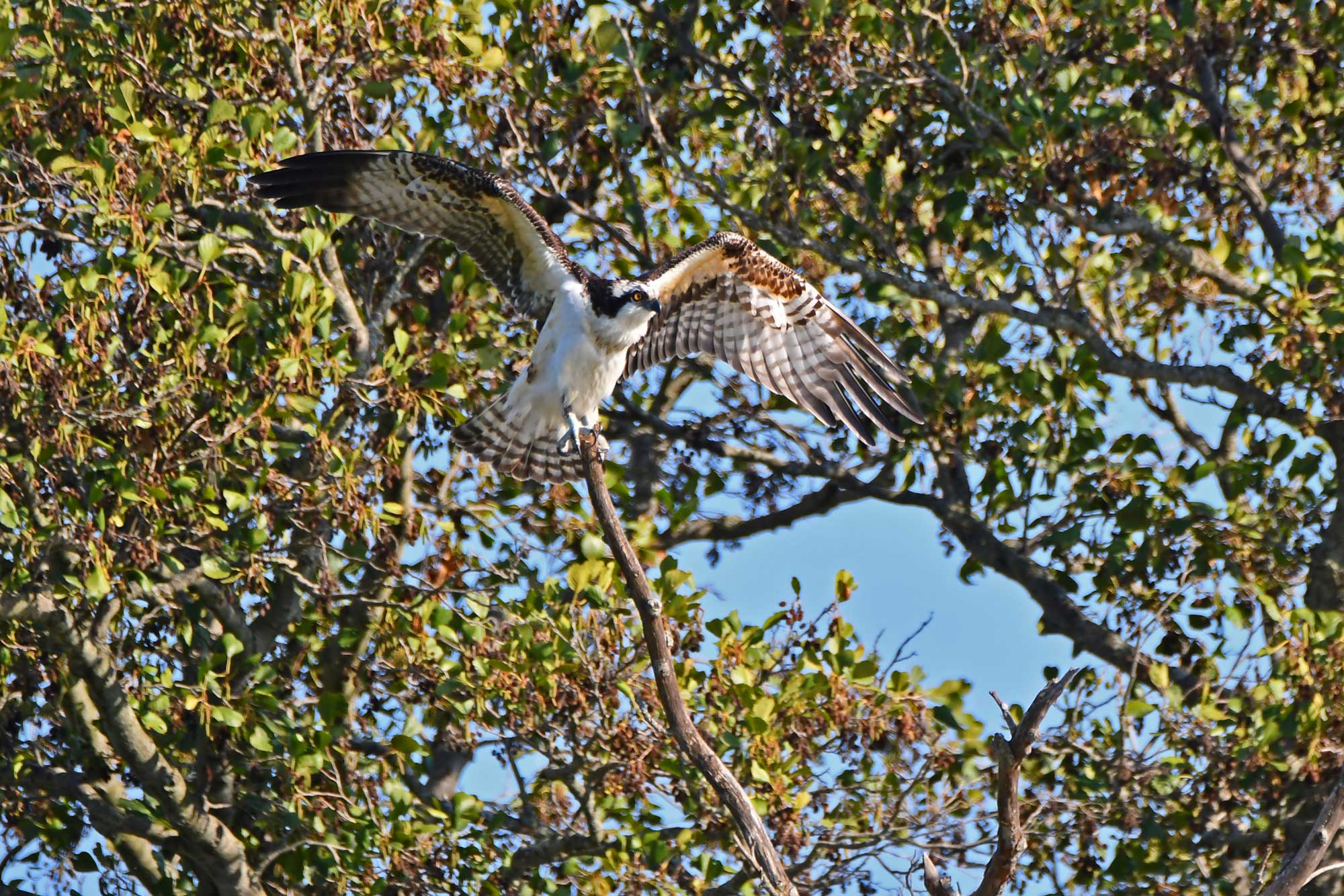
Ospreys also hold their wings differently than eagles while in flight. An eagle's wings will be stretched out and appear straight in flight, but osprey fly with a bend in their wrist, creating an M shape. This positioning of their wings helps them quickly dive down.
If you're close enough for a good look, their talons can help you tell the difference too. Ospreys' talons are sharply curved to help them catch prey, and their four talons are arranged differently than eagles'. Ospreys have two talons facing front and two facing back, while eagles have three facing front and one facing back, according to the National Aquarium.
They are big fish eaters
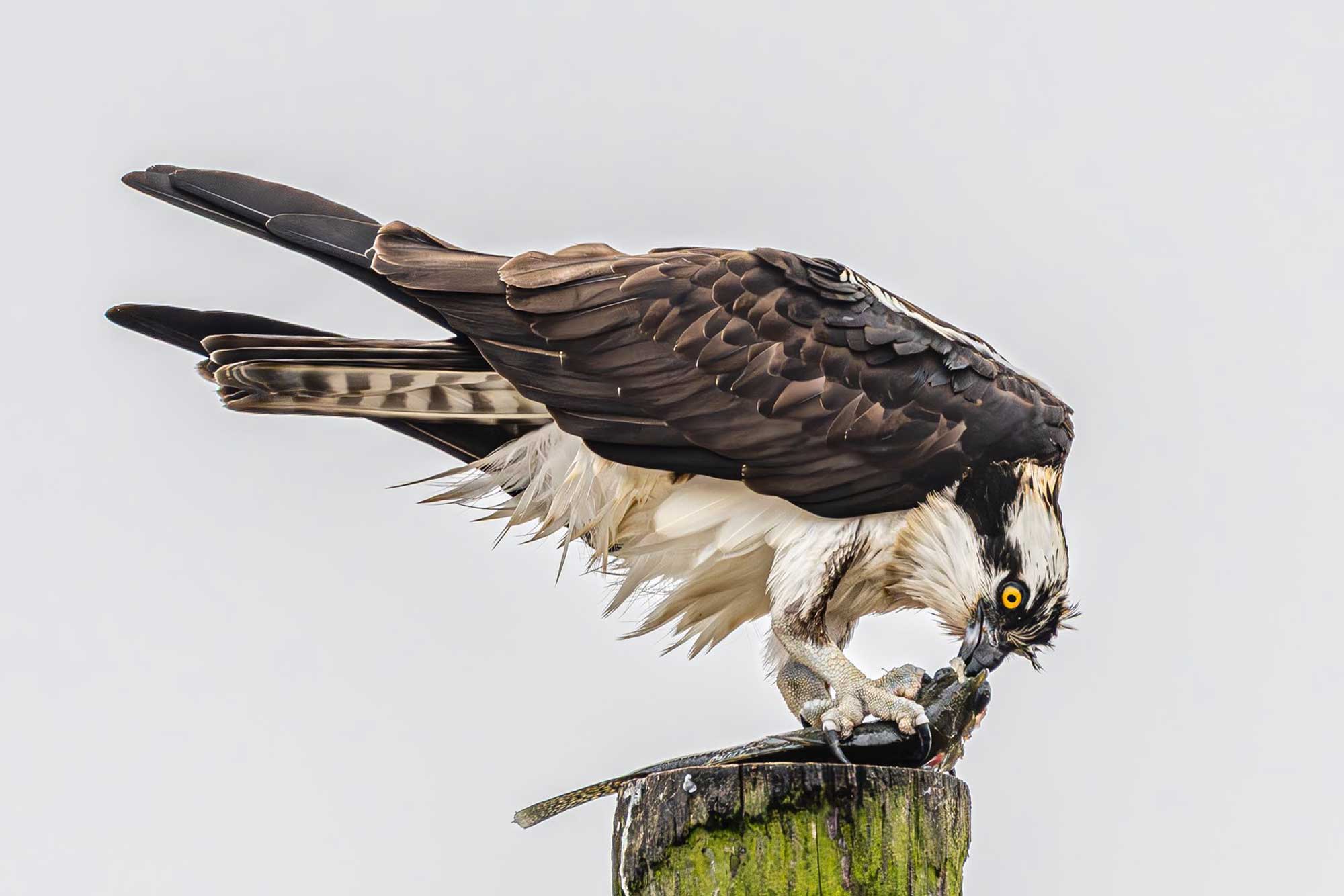
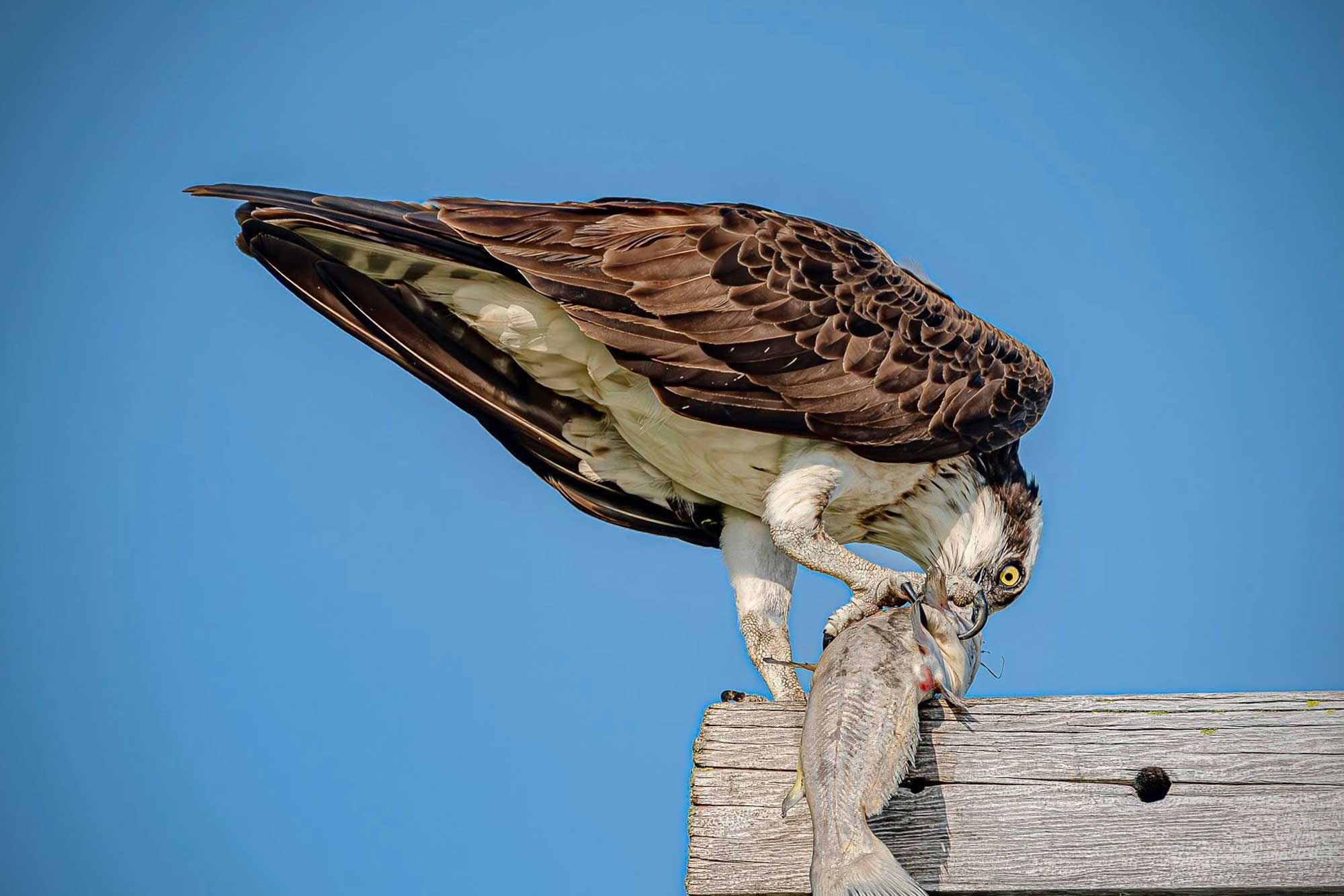
Ospreys have a one-track mind when it comes to food. They eat fish, fish and more fish. In fact, their diet is about 99% fish, the National Audubon Society reports. They are quite successful at catching fish too, coming up with a fish on about 75% of their dives.
While they are picky about preferring to dine on fish, they aren't that picky about the kind of fish. In North America, ospreys are known to eat about 80 different kinds of fish, the Cornell Lab of Ornithology reports. Their typical catch is between 6 inches and 13 inches long and weighs between 1/3 pound and 2/3 pound.
In those rare instances when they aren't eating fish, they will eat snakes, salamanders, birds, small mammals and fish carcasses, the Cornell Lab reports.
They are highly skilled fish hunters
A bird that eats a lot of fish has to have the necessary skills to catch fish, and ospreys certainly do. Their toes are key to their keen hunting ability. The four toes have barbs that help them tightly grasp onto fish, and their outer toes can switch from facing backward to forward for better grip, the Audubon Society reports. Once they catch a fish, they will position it in their grasp so it is facing forward, allowing them to be more aerodynamic in flight.
Ospreys are good at finding fish too. As they soar over water, their keen eyesight helps them see fish on the move below. On a dive, they can go up to 3 feet deep to snatch a fish out of the water. As they enter the water, they close their nostrils to keep water out and close a third eyelid, called a nictitating membrane. This eyelid is translucent, functioning as goggles as they maneuver underwater.
They nest in wide open spaces
Ospreys like to build their nests in open areas that provide plenty of space for them to approach the nest. Common nesting spots include tree snags and treetops, cliffs and human-built structures and platforms, according to the Cornell Lab. Males usually select a nesting site and collect most of the nesting material and the females construct the nest.
Manmade structures like utility poles are prime nesting spots for ospreys, but their preference for these sites can be problematic, according to the Audubon Society. When these poles include power lines, the nests are a fire hazard and can result in power outages. To help protect the birds and also prevent outages, electric companies monitor poles with drones or through other means and build nesting platforms nearby to entice the birds to nest in a safer location.
Like eagles, ospreys add to their nests from year to year, so they get larger over time. At their largest, they can be 10 feet to 13 feet deep and 3 feet to 6 feet wide! Other birds often use osprey nests too, but at different times of the year. Eagles, great horned owls and even Canada geese may move into an osprey nest in late winter or early spring, then the osprey will take it over during their nesting season later in the year. Some smaller birds, mainly grackles, starlings and house sparrows, may even create their own nest in an out-of-the-way spot in an active osprey nest.
Their population remains at risk
It's widely known that the bald eagle population was decimated by the use of the pesticide DDT, but our national emblem was far from the only bird affected. Ospreys, too, suffered precipitous population declines when the pesticide was widely used to prevent insect infestations among crops in the 1950s, '60s and '70s. The pesticide harmed ospreys, eagles, peregrine falcons and more as it entered the food chain. As the birds consumed prey that had become contaminated by DDT, it began to accumulate in their bodies. Eventually, it interfered with their ability to nest successfully because DDT caused their eggs to have thin, weak shells that prevented them from being properly incubated, the American Bird Conservancy reports.
In some areas, ospreys nearly disappeared entirely during the time when DDT was in use. About 90% of all breeding pairs of ospreys disappeared from the stretch of the Atlantic Coast between New York City and Boston, the Cornell Lab reports. After DDT was banned in 1972, the osprey population slowly began to rebound, but they are still listed as endangered or threatened in some states.
In Illinois, ospreys are listed as a threatened species. Their population in the state suffered significant losses because of the use of DDT, but other factors contributing to their continued status as a threatened species include poor water quality and human disturbance near waterways, according to the Illinois Department of Natural Resources.
Farther from Illinois, population declines of a fish species called the Atlantic menhaden are affecting ospreys because they are among their primary food sources in coastal areas. The fish are believed to be on the decline because of overfishing as well as the effects of climate change on our oceans, and as they become less abundant it results in less food for osprey chicks, the Audubon Society reports.