Wander at Will: A rare sight at Lake Renwick Migratory Bird Viewing
Editor’s note: This story is part of our Wander at Will series, which is designed to inspire you to enjoy the many recreation opportunities in your Will County preserves in whatever ways you are able to. Whether you’re a well-traveled explorer or just starting your outdoor adventures, digital marketing coordinator Meghan McMahon hopes her first-person adventures will help you find new ideas, tips and hidden gems to make it easier to connect with the outdoors all year.
One of my goals as I make my way through the preserves on this year-long series of adventures is to get better at birding. I've always found birding a little intimidating because there's a lot of room for error — lots of birds look alike and even more of them sound alike — but people in the birding community have always seemed welcoming to those of us who are very much still beginners.
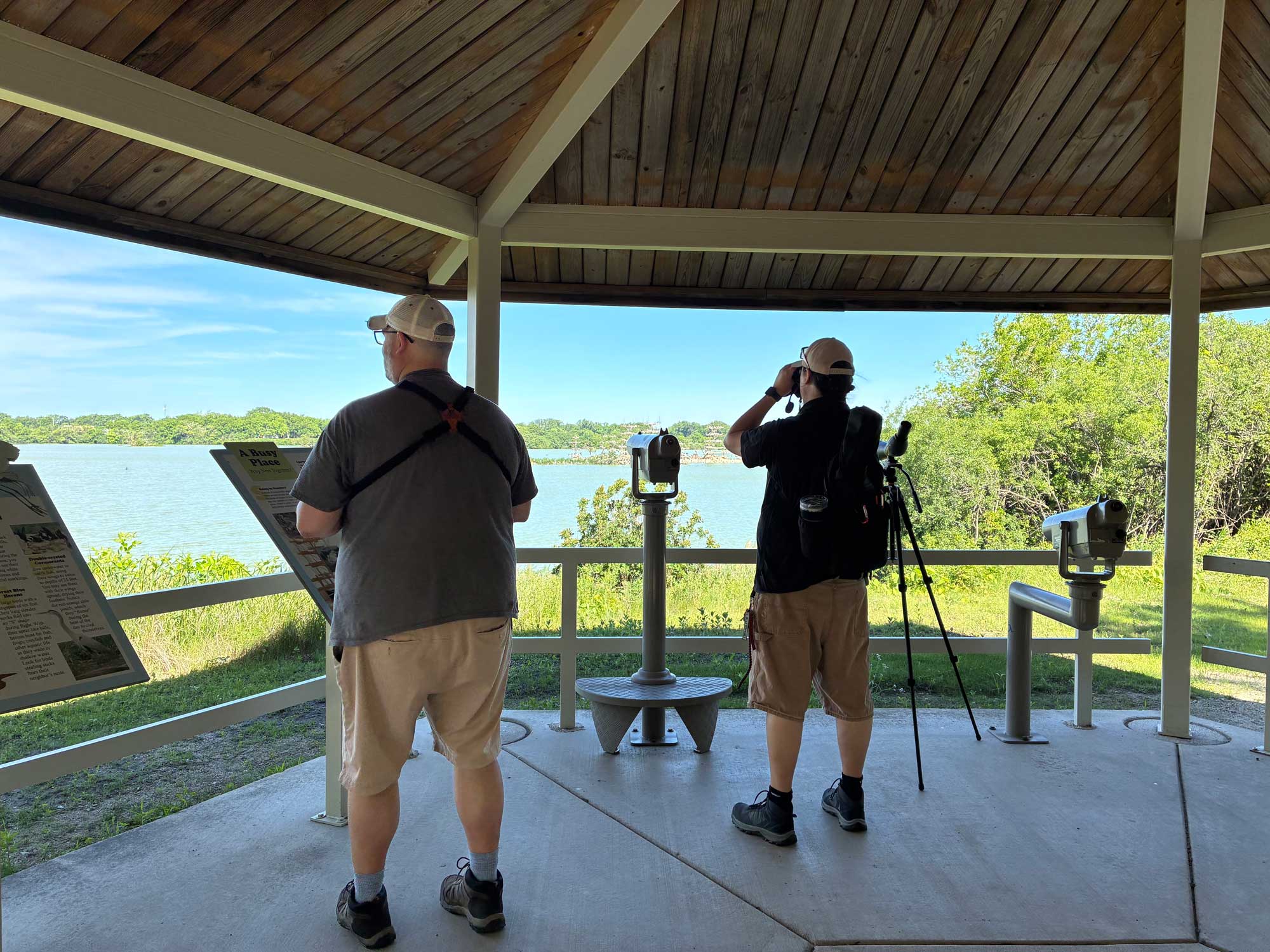
To help me make progress toward my goal, I spent a little time on a Saturday morning in June at Lake Renwick Heron Rookery Nature Preserve. From March 1 to Aug. 15, the rookery access at Lake Renwick is closed to protect the nesting activity of migratory birds in the preserve. During this period, the only time to visit is when the Migratory Bird Viewings are held from 8 a.m. to noon each Saturday. Volunteers are on hand to give people a glimpse at the islands and also share information and answer questions.

I had been to one of the weekly bird viewings before, but it was several years ago, so I was long overdue. When I first arrived, I stopped by the newly updated Visitor Center to get the lay of the land and see what was happening that day. Inside, a friendly volunteer greeted me and told me about some of the birds they have been seeing and hearing of late. Some of the birds she mentioned were those we would expect to see out on the nesting islands at Lake Renwick Heron Rookery — cormorants, herons, egrets and even bald eagles that are frequently seen in the preserve — but the volunteers track all bird sightings, not just the birds that nest on the islands. That means they record sightings of waterfowl and shorebirds as well as raptors, songbirds and more.
Newly installed panels on the wall list all the species known in the area, and the volunteers update the checklist with dates of when all the different species have been seen. Checking this out, you can see how the season has progressed. In May, for example, many warblers were spotted as they passed through the area. Earlier in the season, many duck and other waterfowl species were recorded for the first time, and many other birds had been recorded throughout the season too.
On the day of my visit, the app Merlin Bird ID had alerted to a blue grosbeak singing, but no one had yet caught sight of it. Because a blue grosbeak would be somewhat of an unusual sighting — they aren't usually seen this far north in Illinois — they were hoping to verify if the Merlin sound ID was an accurate one. I promised to keep an eye and an ear out as I walked the trail, and I did, but unfortunately didn't see any blue grosbeaks.
I did have a rare sighting of another kind, though. When I got up to the viewing platform overlooking the nesting islands, I asked if they had seen anything interesting so far that morning, and the two volunteers happily told me that for the past few weeks there had been an all-white, double-crested cormorant out there. They even had the spotting scope directed at where they had spotted it that morning, and when I took a look, there it was — a cormorant that was stark white in all the places where we expect them to be jet black but still with its familiar yellow-orange bill. Had they not pointed it out to me, I would have scanned right over it, thinking it was a gull or some other bird that we expect to be white.
As I chatted with the volunteers, a few other visitors made their way up to the nesting platforms, looking through scopes and binoculars and trying to get photos of the islands as well. They were also excited to hear about — and see — the white cormorant. As one gentlemen left with his camera to go explore more of the trail, he said he doubted he would find anything else as exciting as an all-white cormorant.
The volunteers working during my visit said it had been a quiet morning that day, but they have had good crowds for many of the Saturday morning bird viewings this season. One Saturday even saw about 60 visitors. They said the programs typically draw a mix of return visitors and newcomers, including some who come from out of town to check out the rookery.
The volunteers at the viewing platform are ready for visitors of all ages and birding ability, and welcome the novices as warmly and as enthusiastically as longtime birders who make regular visits. They have scopes pointed out at the island and are ready to share what they have been seeing. They are also happy to answer questions not just about the birds out on the islands but other local bird species as well.
One volunteer said she particularly enjoys when families with young children visit because it's fun to watch the kids make connections with the birds. The volunteers are well prepared for young visitors, with a step stool to help them reach the viewing scopes as well as an interpretive sign that helps them see how big they are compared to some of the larger birds like herons and egrets that populate the preserve. They also have a wingspan rope that they can use to show the kids — and the adults — how their wingspan compares to the birds'.
No matter your age or experience level, there's a lot to see and learn by dropping by at one of the Lake Renwick Migratory Bird Viewings. In 2026, the Saturday morning sessions will continue from 8 a.m. to noon through Aug. 8. If you decide to drop by, make sure to ask about the white cormorant. It was an unexpected delight on my visit.