Nature curiosity: Why do sunflowers follow the sun?
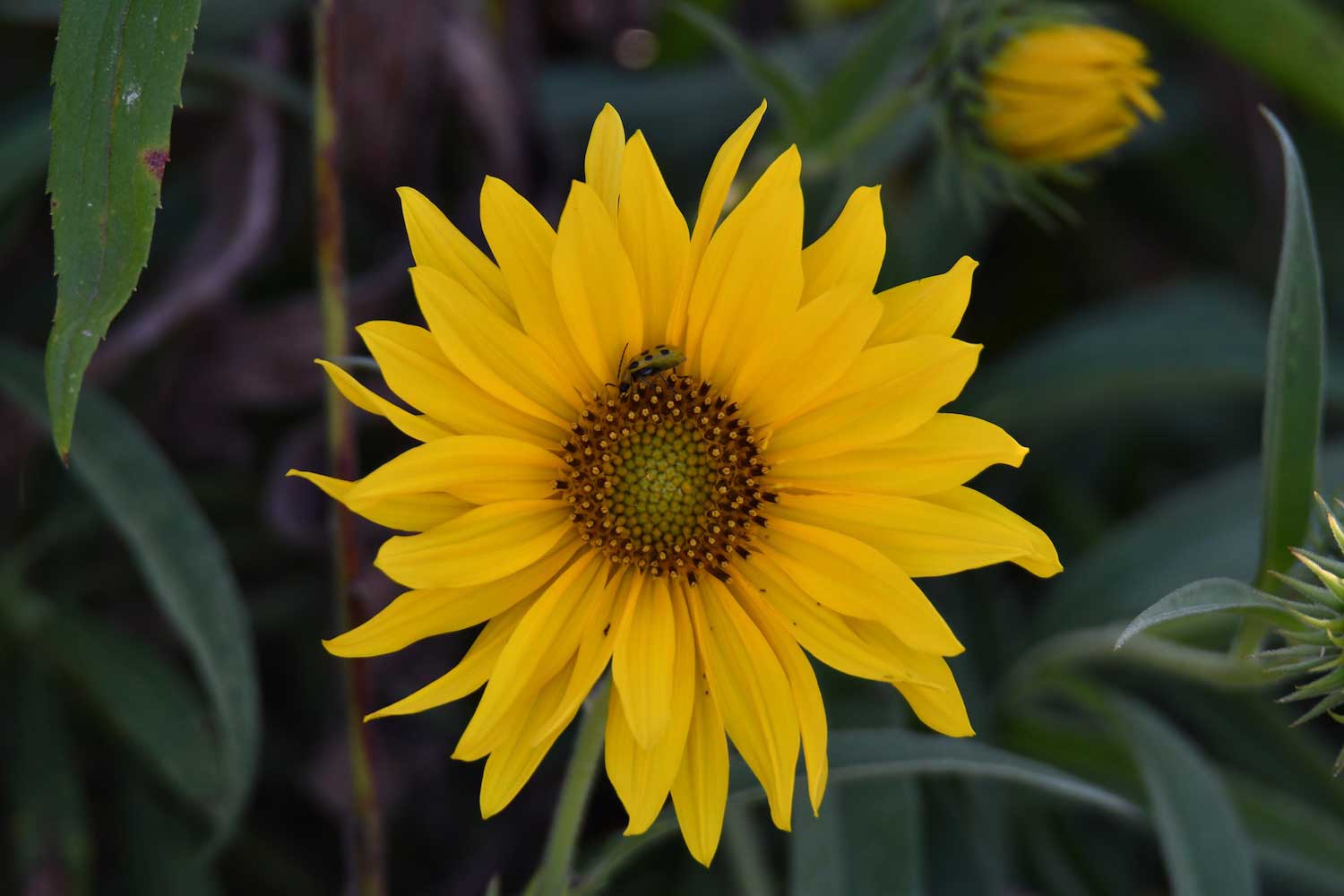
If you look at a young sunflower in the morning, it will be facing east. Return at the end of the day, as the sun begins to set, and that same flower will be facing west. If it seems like these big, bright flowers are following the sun across the sky, it's because they are.
Sunflowers are well-known for this sun-seeking movement. There's even a word for it — heliotropism, which is also referred to as solar tracking. The term comes from the Greek words "helio," which means sun, and "tropism," which means movement of an organism away from or toward an external stimulus.
Only young sunflowers track the sun. As the plants mature and the blooms get larger, the tracking movement diminishes until the flower heads are left facing east to get the morning sun, the University of California Davis reports. Facing east is an advantage because sunlight warms up the plants more quickly in the morning, helping them attract bees and other insects. Facing east also allows them to reproduce more efficiently.
Sunflowers use their circadian rhythm, sort of like an internal clock, to know when the sun will rise. But the question of how sunflowers are able to move with the sun was long a mystery until researchers from the University of California Davis made great strides in understanding the mechanism in research that was published in 2016.
The scientists discovered that the plants' stems allow them to track the sun. During one part of the day, one side of the plants' stems can elongate. Then in another part of the day the other side of the stem elongates. This allows the plants to move with the sun throughout the day, according to the research. As part of their study, the university researchers tied up sunflowers so they weren't able to move with the sun and also exposed some sunflowers to differing levels of artificial light. The plants that were tied up did not grow as well as the ones that were not.
Sunflowers are the most well-known heliotropic flowers, but there are others that track the sun as it moves across the sky. Some poppies, including Arctic poppies, follow the sun, as do buttercups, among others. Even some crops track the sun, including alfalfa and soybeans. Dandelions do as well.
The most common and familiar sunflower is the common sunflower, or annual sunflower. It is the flower that is grown for seed and oil, and it comes in many shapes and colors, according to the Missouri Department of Conservation. The common sunflower is one of dozens of sunflower species, most of which are native to the United States. Sunflower species you might see growing in Will County forest preserves include sawtooth sunflower, woodland sunflower and prairie sunflower.