State-threatened mussel discovered in Forked Creek
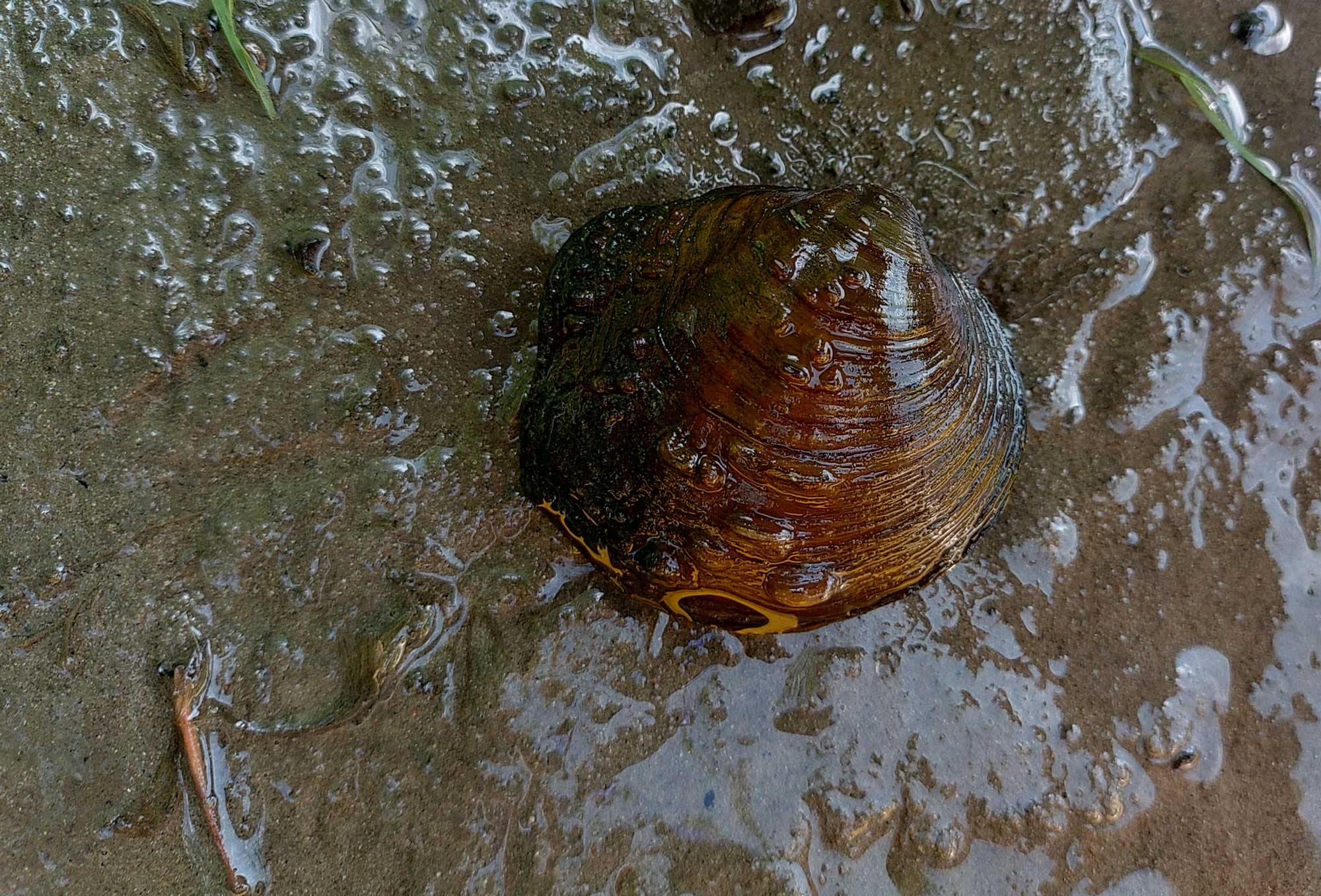
A recent study of Forked Creek found 17 mussel species, including the state-threatened purple wartyback and four species of conservation concern.
The discovery highlights the creek’s high water quality and elevates it to a resource of statewide significance. The Forked Creek preservation system includes six preserves protecting almost 2,660 acres.
The first hint of a mussel population came a few years ago when a utility company was required to conduct a study for a project.
“They found the purple wartyback and other mussels were present,” said Juli Mason, director of conservation programs for the Forest Preserve. “Based on this snapshot study, we commissioned a more thorough inventory to get general data on the species present in our preserves.”
According to the 2025 report, mussels representing 17 species were collected. In addition to the purple wartyback, four Species of Greatest Conservation Need were found: elktoe, flutedshell, black sandshell and ellipse.
Declining numbers
Finding mussels in a Forest Preserve creek is important because freshwater mussels are indicators of high-quality, healthy streams in Illinois, Mason said.
“Mussels are highly sensitive to pollution, sedimentation and habitat degradation,” she explained. “As filter feeders, robust and diverse mussel communities signify clean water and stable ecosystems that contain the specific fish hosts required to complete their life cycle.”
Because of its discovery in Will County, Forked Creek now qualifies as a resource of statewide significance. Protecting the water that flows into creeks is one of the goals of the Forest Preserve, Mason explained.
“We can protect habitat for mussels by improving water quality entering the stream from the surrounding watershed,” she said. “This can include using best management practices to reduce chemical and fertilizer use to prevent runoff and nutrient pollution from lawns and farms. The Forest Preserve also protects portions of the stream and surrounding habitat directly as part of our preserve system.”
While the Forest Preserve will work to protect the creek, the mussels also will be improving the water quality for aquatic life by acting as natural filters. They draw in water through siphon tubes, removing nutrients, microscopic organisms and pollutants before releasing cleaner water back into the stream, according to the Illinois Extension.
Because of this filtering work, mussels are often called the "livers" of creeks and rivers.
But Illinois mussels are struggling.
"Populations of mussels have declined alarmingly in recent decades because of siltation, pollution, and competition from exotic mollusks like the zebra mussel," the Illinois Department of Natural Resources website states. "Of the eighty mussel species native to Illinois, more than half are currently threatened, endangered, extirpated, or extinct."
Wartyback rarity
The Illinois State Museum describes the purple wartyback as a medium-sized mussel with numerous bumps on its outer surface and a purple inner shell called a nacre.
“(The purple wartyback) was formerly common in the central and upper portions of the Illinois River, but it has not been collected alive in the river since 1912,” according to the museum.
The mussel’s other common names are Missouri mapleleaf, purple pimpleback and deerhorn.
Purple wartyback mussels also are endangered in Wisconsin, threatened in Iowa, Species of Special Concern in Michigan and Species of Special Interest in Ohio.
It is illegal to take, possess or transport a purple wartyback or any threatened or endangered species. It also is illegal to remove anything from the forest preserves.