Wild Relatives: The sea otter
Editor’s note: Our Wild Relatives story series will explore the connections between our local wildlife species and related animals from around the globe. By learning about these exotic species, we hope to foster appreciation for the remarkable creatures that live in our backyards and neighborhoods.
Of the 13 otter species in the world, just two live in North America, the river otter and the sea otter. And as their names imply, these two otter species have different habitat preferences, so they don't typically live side by side, although their range does overlap in some areas.
River otters prefer freshwater habitats like rivers, lakes and marshes. They can be found in Illinois and elsewhere across the United States. Meanwhile, sea otters live in salt water along the Pacific Coast. They are partial to kelp forests along the coast, the Sea Otter Foundation and Trust reports.
Otters are related to weasels, and they are the only member of the weasel family, which also includes badgers and wolverines, that are strong swimmers, the San Diego Zoo reports. Sea otters are much larger than river otters, generally weighing between 45 pounds and 90 pounds compared to 30 pounds or less for river otters.
Water lovers
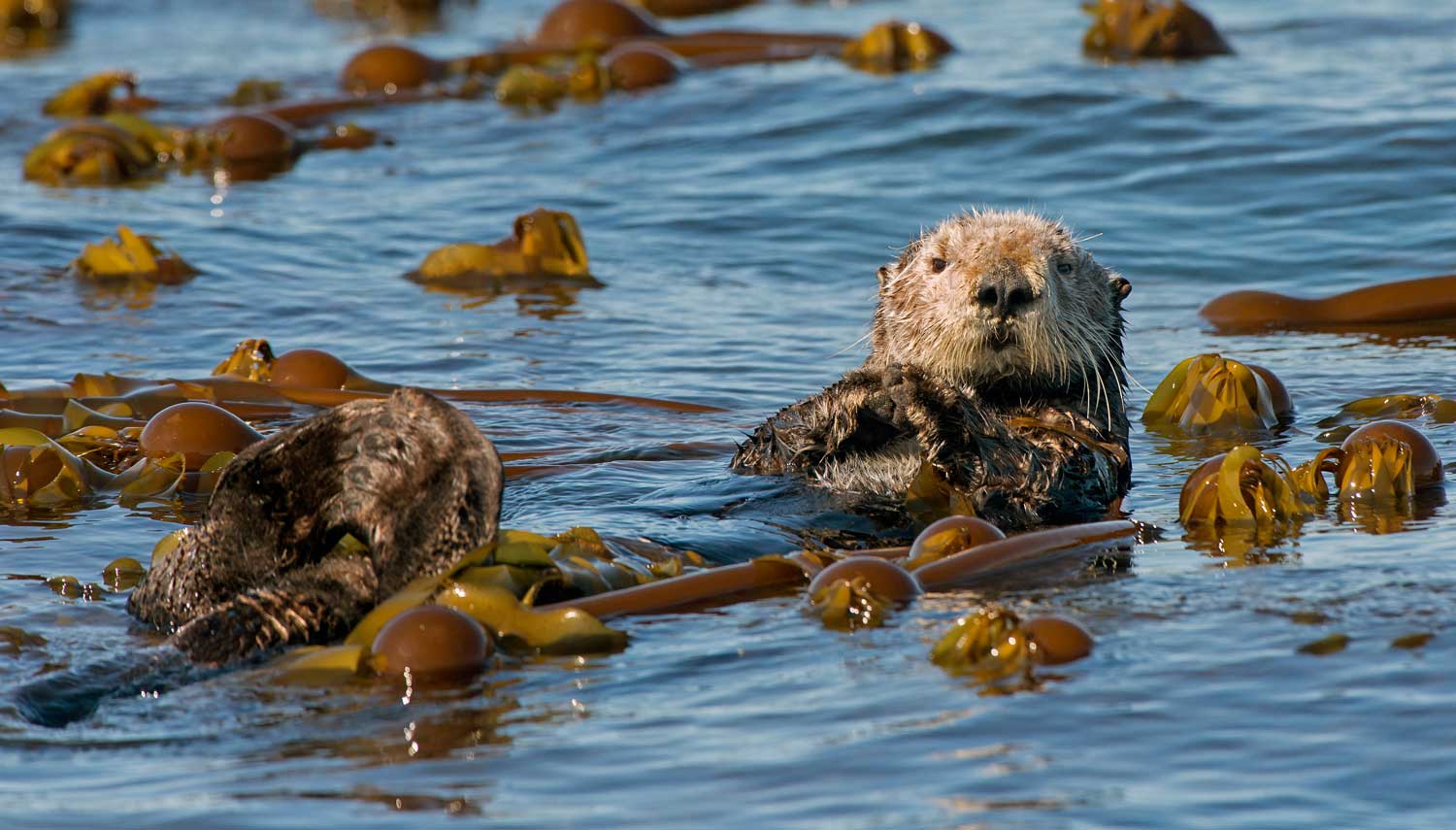
Unlike river otters, which spend more of their time on land than in the water, sea otters spend almost all their time in water. They even give birth in the water, the only otter species to do so. Sea otters usually only come ashore to sleep and rest, National Geographic reports. In the water, they can typically be seen floating on their backs. And while they sometimes go on land to sleep, they can even sleep while floating.
Sea otters often gather together and will rest and float in groups called rafts. These rafts can be big — with hundreds or even more than 1,000 otters floating around together, according to the U.S. Department of the Interior. Sometimes they will intertwine themselves in floating masses of seaweed and kelp to anchor themselves while floating.
To help them stay warm in the often cold waters where they live, sea otters have the thickest fur of any animal, with between 600,000 and 1 million hair follicles per square inch, the Interior Department reports. (Curious how that compares to humans? We have between 800 and 1,300 follicles per square inch.) Sea otters spend a lot of time grooming and conditioning their fur so it is able to trap heat and air next to their skin to insulate them.
Another key adaptation for their aquatic lifestyle is their ability to go without oxygen for long stretches — as long as five minutes at a time. They will submerge themselves to hunt for food and also to escape danger. And while five minutes underwater may seem like a long time, it's not as long as some other semiaquatic mammals. River otters can stay underwater for as long as eight minutes, and beavers have them both beat, able to hold their breath for as long as 15 minutes.
Big eaters
While many marine mammals have a layer of blubber to insulate themselves, sea otters have just their thick fur to provide warmth against the cold water, the Sea Otter Foundation and Trust reports. That means they have to eat a lot each day to maintain their metabolism. Their diet mainly consists of crabs, mussels, sea urchins and clams. They eat frequently throughout the day, eating about 25% of their body weight every day, the Department of the Interior reports.
Sea otters will dive down into the water to hunt for food, but they only eat while at the surface, the Monterey Bay Aquarium reports. After catching a meal, they will typically flip on their backs to eat. They are one of the only mammals that is known to use tools and will use rocks to crack open clams and other food items.
The rock they use as a tool can be carried around with them in "pockets" formed from loose skin under their forearms. That's not all they use their pockets for, though. They will also store away food they find when underwater so their paws are free to continue hunting for more before returning to the surface to eat.
Back from the brink
Like beavers, sea otters were once hunted to the brink of extinction because their thick fur was so valuable in the fur trade. At one point in the 19th century, their population was estimated at just 2,000 otters living in scattered colonies along the Pacific Coast, the Department of the Interior reports.
In 1911, the International Fur Seal Treaty was enacted to help protect otters and other animals. Further protections came in the 1970s when both the Marine Mammal Protection Act and Endangered Species Act were enacted. Today, their population has recovered, but they remain endangered.
About 90% of the world's sea otter population lives off the coast of Alaska, including around some of the state's national parks, according to the Department of the Interior. Additional populations of sea otters live off the coast of California, mainly between San Mateo County in the San Francisco Bay area and Santa Barbara County, which is north of Los Angeles.