Wild Relatives: The African painted dog
Editor’s note: Our Wild Relatives story series will explore the connections between our local wildlife species and related animals from around the globe. By learning about these exotic species, we hope to foster appreciation for the remarkable creatures that live in our backyards and neighborhoods.
The canid family of mammals includes our pet dogs but also a long list of wild animals that roam lands all over the world. Close to home, that includes coyotes and red foxes. Elsewhere in the United States, wolves make the list as well.
Africa is home to several canids as well, including the African painted dog, which is also called the Cape hunting dog and African wild dog. These dogs live in the African plains and savannas, and their population is mainly centered in Tanzania, Mozambique and the southern part of the continent, National Geographic reports.
African painted dogs are always on the move. These dogs love to roam and can cover huge amounts of territory in a single day. Studies have shown that a single pack of these dogs needs between 80 and 800 square miles of land for hunting and roaming, according to the San Diego Zoo. To put that into context, consider that the entire city of Chicago is about 230 square miles.
A coat of many colors
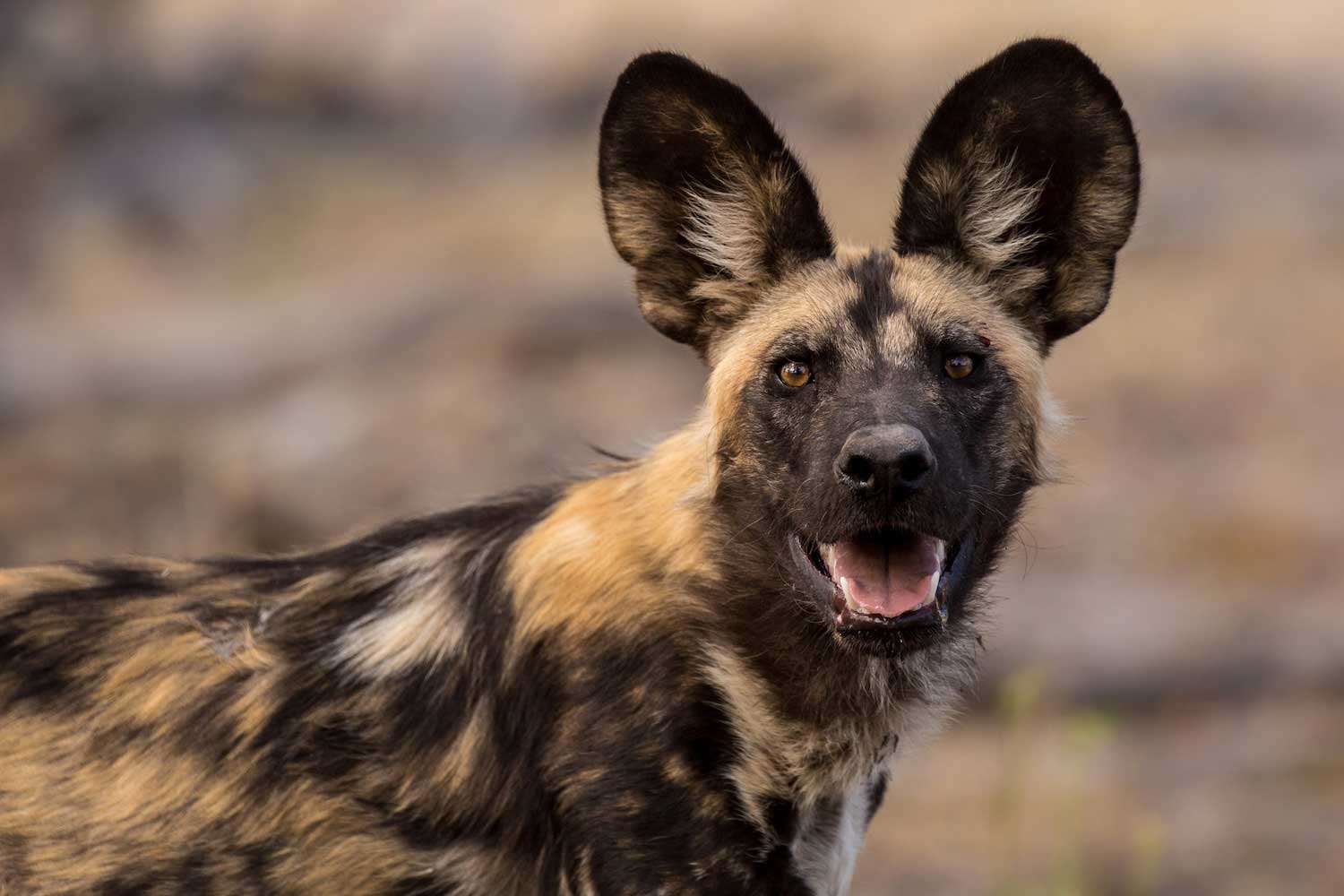
African painted dogs have a unique fur coat that includes patches of many different colors of fur, including brown, white, yellow, black and red. Just like the stripes on a zebra, the patchy appearance of their coat is unique to the individual. No two dogs have the same pattern, National Geographic reports.
Besides their colorful coats, their most noticeable feature is their large, round ears. Their large ears can move from side to side to help them detect sound, according to National Geographic. And just like the large ears on a fennec fox, they also help the dogs stay cool in the desert climate where they live.
African painted dogs are larger than coyotes. They weigh between 40 pounds and 75 pounds and are typically between 3 and 4 1/2 feet long and 2 feet to 3 1/2 feet tall at the shoulder. Coyotes, meanwhile, usually weigh between 25 pounds and 35 pounds and are 2 feet to 3 feet tall, the National Park Service reports.
Another difference between coyotes and African painted dogs is their front feet. Painted dogs have only four toes on their front feet, compared to five front toes on coyotes, domesticated dogs and other relatives in the canid family.
Pack animals
Like coyotes and wolves, African painted dogs are highly social animals. They live in packs with between five and 20 dogs, and each pack has an alpha male and an alpha female, the San Diego Zoo reports.
Pack members generally get along and are not aggressive toward one another. They will work together to raise the pups and also take care of wounded and sick pack members, according to the African Wildlife Foundation.
The alpha female will give birth to a litter of 10 to 12 pups in a den created in an abandoned burrow or dug out under a termite mound, the San Diego Zoo reports. The mother and several other pack members will stay close to the den to take care of the pups and protect against predators while other pack members are responsible for hunting for the pack.
As the pups grow and are weaned, they are fed regurgitated food by the pack. When they are about 3 months old, they will begin to follow the adult pack members to learn how to hunt. Food sharing is a critical part of pack life, the San Diego Zoo reports. As the pups get older, the adult members will allow the younger dogs to eat first, making sure they get enough to eat even if there is not enough food to go around.
African wild dogs are different than most other social mammals in that it is the adult males that stay with the pack rather than the females. Among many social mammals, including baboons and elephants, the females are the ones that stay with the pack they are born into, but among painted dogs the males generally stay with their pack, the San Diego Zoo reports. The females will leave their original pack when they are about 3 years old. Because of this, most packs have many adult males but only one adult female, the alpha.
Highly skilled hunters
African painted dogs are predators, and they play an important role in the ecosystem by helping control animal populations, the African Wildlife Foundation reports. Their hunting targets include antelopes, gazelles, rats, warthogs and wildebeest calves as well as birds.
The dogs will hunt twice a day, typically at dusk and dawn. They are highly successful hunters, capturing their prey between 70% and 90% of the time, the San Diego Zoo reports. Compare that to lions, which are successful only 30% to 40% of the time. Once they catch an animal, they have to eat it fast so other nearby predators like lions and hyenas don't try to steal it away.
A few factors contribute to their success as hunters. First, their unusual patchwork coats can confuse prey into thinking the pack is larger than it is. They team up to work together on a hunt, using various vocalizations and sounds to communicate with one another, according to the zoo. They also take turns chasing their prey and are able to run at speeds of up to 37 mph for as long as 3 miles at a time, which wears their prey down.
Facing many threats
African wild dogs have been endangered for more than 20 years, and their estimated population in the wild is about 6,600, the African Wildlife Foundation reports. Today, African painted dogs are absent from 25 of the 39 countries where they lived 50 years ago.
Their population has declined sharply for many reasons. Today, the primary threat is loss of habitat and habitat fragmentation, according to the foundation. As the human population in their range has grown and expanded, the dogs have lost much of the territory where they once roamed.
The dogs are also considered a nuisance by humans, and some governments have offered bounties in exchange for painted dog tails, the zoo reports. In some areas, farmers blame the dogs for livestock loses caused by other animals such as hyenas and will poison or shoot the dogs as a result. Lastly, the dogs can contract illnesses such as rabies and canine distemper from domestic dogs, and this can lead to epidemics among populations of the dogs.