Wander at Will: Your best bets for finding spring's beautiful blooms
Editor’s note: This story is part of our Wander at Will series, which is designed to inspire you to enjoy the many recreation opportunities in your Will County preserves in whatever ways you are able to. Whether you’re a well-traveled explorer or just starting your outdoor adventures, you’ll find new ideas, tips and hidden gems to help you connect with the outdoors all year.
If your favorite part of early spring is waiting and watching for the season's ephemeral wildflowers to bloom, your annual wait is over.
Ephemeral wildflowers start emerging in our woodlands even before spring officially begins, and the blooms will continue in waves throughout the season. For some, the blooms seem to have a blink-or-you'll-miss-it quality, lasting only a few weeks or even days before fading away until next spring.
One such wildflower that's easy to miss if you don't time it right is bloodroot, said Suzy Lyttle, program coordinator at Hidden Oaks Nature Center. It's her personal favorite in part because it's fleeting.
"I love the chase of it all," she said, adding that bloodroot blooms might only last one to three days.

Other flowers may last a little longer, but none are known for their longevity. The blooms on ephemeral wildflowers don't last long because they have to do a lot quickly. They must emerge, grow, flower and then set their seed all before the trees become green and leafy, blocking sun from hitting the forest floor.
If you'd like to learn more about spring's ephemeral wildflowers, check out our Event Calendar for upcoming wildflower hikes. Lyttle is one of several Forest Preserve naturalists who will be leading hikes in the preserves this spring as part of the Where the Wildflowers Are series.
If you'd like to plan your own wildflower hikes, here's a go-to guide to which preserves offer the best viewing for some of the most anticipated blooms. Don't miss your chance to see these beauties in person, because for many of them their time here is fleeting.
Goodenow Grove Nature Preserve
This preserve in eastern Will County is among the Forest Preserve's largest, so it's no surprise there are a few good spots for particular spring blooms. For starters, the trail outside Plum Creek Nature Center that leads to Snapper Pond is a nice place to see wild hyacinth, Lyttle said. These white flowers typically bloom from April through June in Illinois.
Another good trail to check out here is Scout Trail, which comes alive with wild geranium in May, Lyttle said. Wild geranium's rounded, five-petal purple blooms can typically be found in rich woodlands.
Hickory Creek Preserve — Hickory Creek Barrens
This preserve is a top spot for our earliest blooming spring ephemeral — skunk cabbage. Look for it around the creek, Lyttle said. Skunk cabbage can bloom as early as late February or early March.
Even after the peak period for skunk cabbage has come and gone there is plenty to see along the natural surface trails at Hickory Creek Preserve's three access areas. It's a good preserve to look for different blooms as the season progresses.
Hidden Oaks Preserve
Our newest preserve is no slouch when it comes to spring ephemerals. In fact, Lyttle said it is the best spot to see both Dutchman's breeches and cut-leaved toothwort. "The valley is covered in white," she said of the display.
Dutchman's breeches, with its white flowers that look like pants hanging from a clothesline, typically blooms from mid- to late March into May. Cut-leaved toothwort, named for its leaves' toothy projections, comes a little later, blooming from April into May.
McKinley Woods — Frederick's Grove
The hills come alive here each spring with ephemeral blooms, but Lyttle said there are two in particular that are best seen at Frederick's Grove: large-flowered bellwort and wild columbine.
Large-flowered bellwort, which is also called yellow bellwort, produces its drooping yellow blooms from mid-April to mid-May. Wild columbine starts to bloom about the same time, but its red and yellow flowers can sometimes be seen into early summer.
Messenger Woods Nature Preserve
This spot is Lyttle's personal favorite for spring blooms. "I have been going there for at least a decade now," she said. "I know it like the back of my hand."
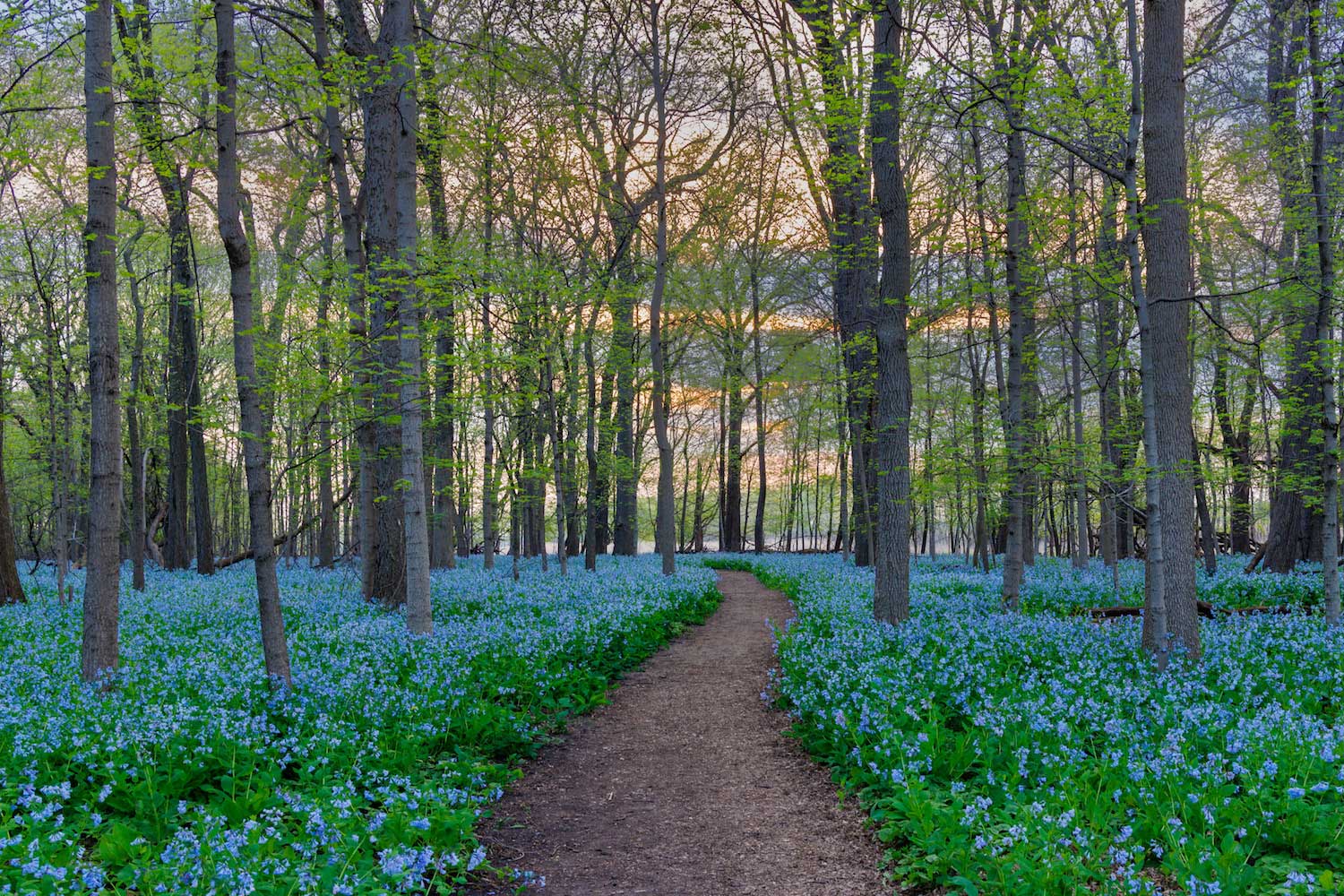
It's the best spot to see great white trillium, and it's also a good place to see Virginia bluebells. Lyttle said bluebells are a favorite for many people because of how showy they are. She said most ephemerals produce small blooms, but bluebells can really transform the forest floor.
O'Hara Woods Preserve
There's lots to see here throughout spring, but its claim to fame is that it is the best spot in the preserves to see beloved Virginia bluebells. Don't take our word for it. See it for yourself this spring. These beauties bloom to much fanfare between late April and early May each spring.
The bluebells truly carpet the forest floor in spots at O'Hara Woods, so it's a can't-miss spot for anyone who counts them among their spring favorites. Before and after bluebell season there's plenty more to see along the trail, but it's during the peak bluebell season that it really shines.
Raccoon Grove Nature Preserve
This preserve is a good one in general for seeing a diversity of spring's ephemeral wildflowers, but there are a few things you can see here that aren't that common elsewhere. For starters, early in the season you can find harbinger of spring, Lyttle said. These appropriately named tiny flowers are among the first to bloom each year, but they can be hard to spot because they only grow about 5 inches tall and produce small blooms.
Among the other flowers this preserve is known for are a variety of trillium species, including drooping trillium and toadshade. Both bloom from April into June.