Wander at Will: A winter walk with Winston
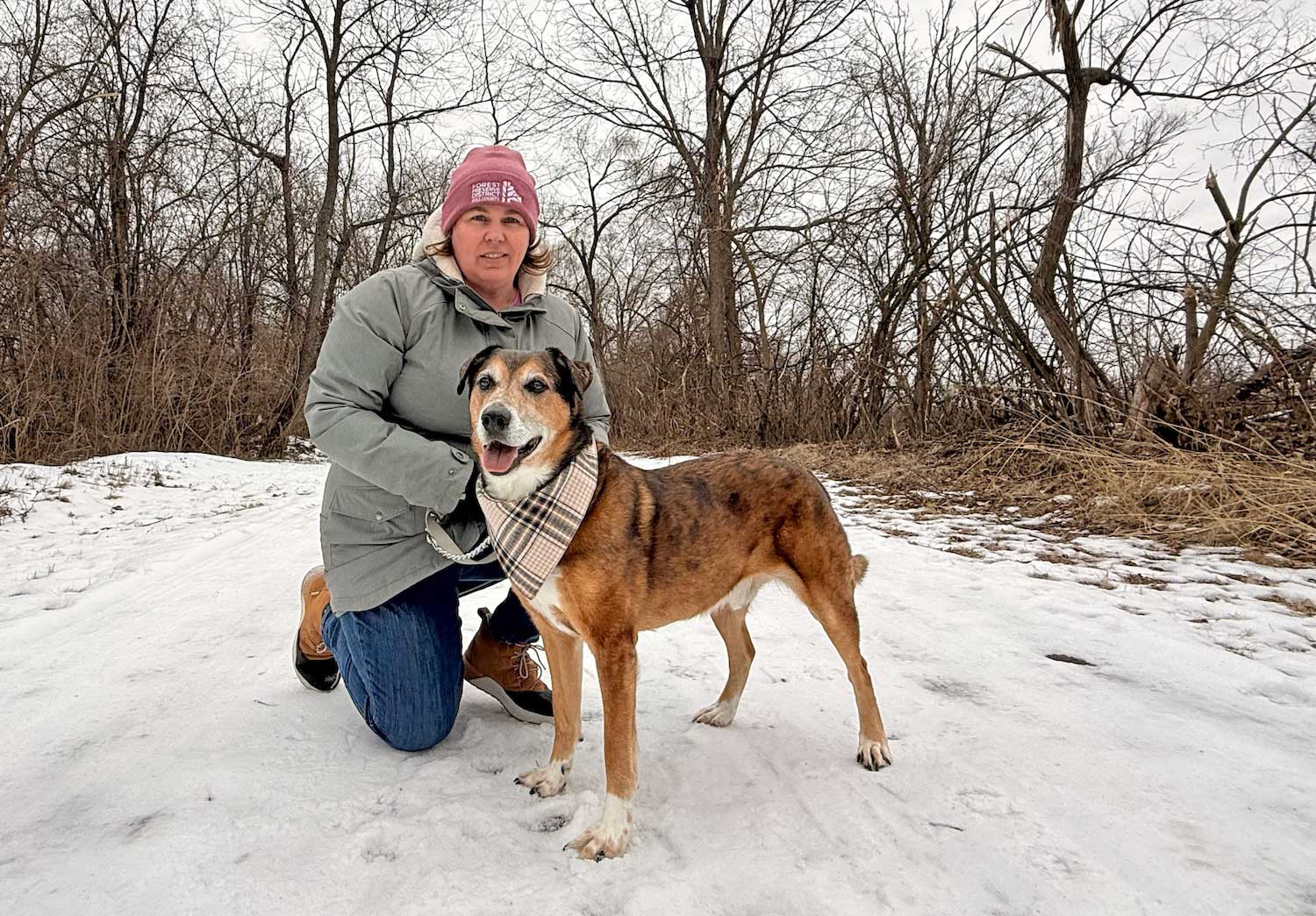
Editor’s note: This story is part of our Wander at Will series, which is designed to inspire you to enjoy the many recreation opportunities in your Will County preserves in whatever ways you are able to. Whether you’re a well-traveled explorer or just starting your outdoor adventures, digital marketing coordinator Meghan McMahon hopes her first-person adventures will help you’ll find new ideas, tips and hidden gems to help you connect with the outdoors all year.
If you’re a dog owner, you know you aren’t the only one that can get a case of cabin fever come February. Our four-legged friends can start feeling a little cooped up in winter too because conditions aren’t always that favorable for a walk.
Our dog, Winston, loves a good walk, but the sidewalks in our neighborhood can be covered in ice and snow for weeks after a snowfall, so we don’t walk him as much as we do at other times of the year. He spends plenty of time out in the yard, but he misses his daily walks. With that in mind, I decided to take him along for a winter walk at Lake Renwick Preserve — Turtle Lake Access. I figured the change in scenery would be good for him.
A few things to know about Winston: He isn’t the brightest dog, and he isn’t the fittest. And he loves chicken — chicken toys, chicken treats, actual pieces of chicken. This last one isn’t relevant here; it’s just a testament to his weirdness.
His fitness level is relevant. It can be a challenge walking Winston because although he doesn’t lack in enthusiasm for a walk, he does lack in stamina. No matter how much we walk him, he doesn’t love a really long walk. A mile and a half is about his limit in winter. In the summer, he gets hot quickly, so even a mile can be pushing him to his limits, and that’s when we time our walks for the coolest part of the day.
Our trip to Lake Renwick wasn’t Winston’s first adventure in the forest preserves. We have a Forest Preserve trail across the street from our neighborhood, so he’s a regular wanderer there. He likes walking on the trails because the sniffs are good — much better than along our usual neighborhood route.
We started out about as slowly as expected at Lake Renwick. The smells were just too good and too new to hit any sort of stride right away. This can be a little frustrating sometimes when I’m trying to double dip walking the dog with a light workout, but on this day, I was content to let him sniff away.
Sniffing walks are beneficial for dogs for a few reasons. For starters, they are enriching and allow them to engage with their senses, according to the Animal Humane Society. They are also good exercise for their mind and body and help reduce stress — similar to the benefits we get from talking a walk outdoors.
All the sniffing also meant a lot of peeing, because what good is visiting a new place if you can't let everyone else know you were there by scent marking time and time again? Needless to say, between the sniffing and peeing, the pace on our 1.4-mile walk was nothing to write home about. The slow pace was helpful, though, because just like our neighborhood sidewalks, the trail was slick and snow-packed in some spots, as is to be expected in winter.
Walking along the edges of the trail, or sometimes just off the side of the trail, helped avoid the slickest spots along the way. It also kept Winston where he wanted to be, which allowed us to avoid a lot of pulling on the leash. He's not a big puller in general, but if he gets on the scent of something he can be a little forceful about where he wants to go.
Winston smelled the scent of plenty of animals that had walked our path before him, but we didn't see much wildlife on our walk, just a few birds and squirrels in the trees. This was probably a good thing because Winston loves chasing squirrels. One thing we did see a lot of was poop, some wildlife scat but mostly dog poop. This is always disappointing because it's not hard to clean up after your dog — plus it's the law.
It just takes a few seconds to pick up your dog's poop, and it goes a long way toward keeping the environment clean. Dog poop and wildlife poop aren't created equal. Our dogs don't eat from the natural environment like wildlife does, so their poop does not return resources and nutrients like animal scat does when it breaks down. Instead, it can pollute environments with high quantities of nitrogen and phosphorus, which can create imbalances in the ecosystem. Plus no one wants to look at dog poop as they enjoy a walk in nature.
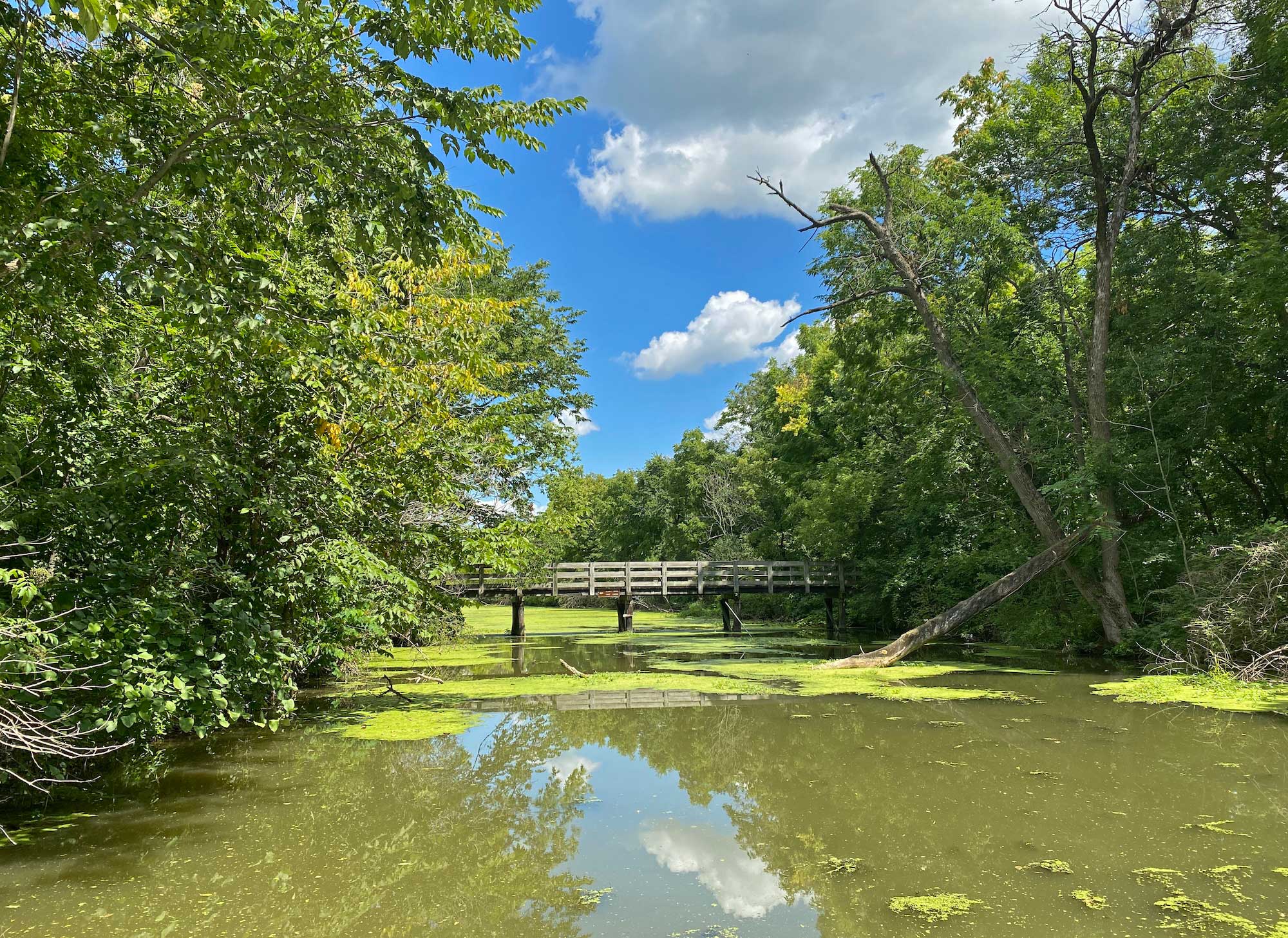
Our path at Lake Renwick took us on a loop around a few of the smaller lakes on the northwest side of the preserve, but we could have kept going if we wanted. Keep in mind, however, that dogs are not allowed at Lake Renwick Preserve's Heron Rookery Nature Preserve because it is a state nature preserve. Dogs are prohibited in state nature preserves because the dedicated spaces protect sensitive habitats, and dogs can interfere with this.
By the time we made it back to the car, Winston was worn out both from the walk and all the sniffing. He was ready to hop into the backseat to rest on the ride home. But he'll be itching to get back out again, so we will hit the trails soon for a change of pace from our neighborhood walks. If you see us, say hi.