No-mow plants, rougher asphalt help protect Theodore Marsh wildlife
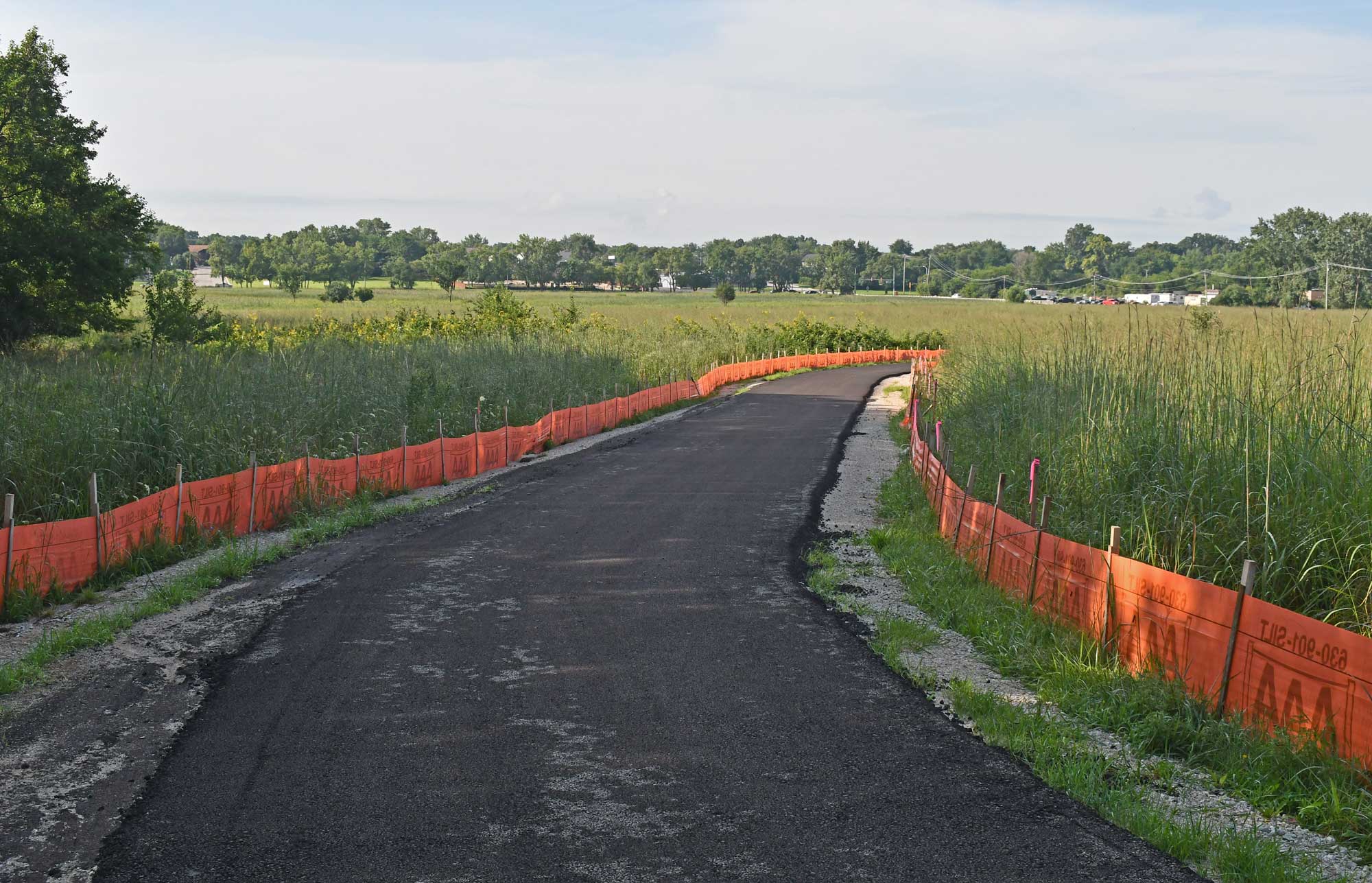
Wildlife-friendly asphalt and low-growing native plants will help keep animals safer along Theodore Marsh’s newly paved loop trail this summer and beyond.
The newly paved trail presented an opportunity to reduce mowing along the path. The trail was paved to prevent limestone screenings from washing down the slope when it rained, which will make it easier to maintain and provide a more consistent surface for hikers and bikers. This project is part of the District's 2025–2030 Capital Improvement Program.
In advance of the paving, the Forest Preserve’s Conservation Department requested that low-growing native vegetation be planted next to the paved surface. A rougher type of asphalt also was installed to give reptiles better traction so they can move off the trail more quickly when people or machinery are coming through.
“It’s kind of an example of having to balance visitor access and maintenance needs but also protecting the natural resources of the site,” said Juli Mason, director of the Forest Preserve’s conservation programs.
Other trails also are being reviewed to see where there are opportunities for changes that would benefit wildlife.
“We have quite a few sites where we have trails that go through sensitive wildlife areas,” Mason said. “And so, more generally speaking, we’ve been working to sort of tweak our maintenance practices to try to reduce the risk to some wildlife.
“In some places we’ve been able to raise the height of the mower decks or adjust the time of day that we’re mowing so we’re not mowing in the morning when they’re most vulnerable,” she added.
No-mow vegetation
The Theodore Marsh trail is one place where vegetation had to be planted along the recently paved trail, presenting an opportunity to use a different type of turf — a type of turf that isn’t turf at all.
This fall and winter, the area adjacent to the trail will be seeded with low-growing native plants and wildflowers.
“The idea is to have a low meadow sort of plant area that grades into the taller prairie beyond it,” she explained.
The vegetation will be maintained through prescribed burning and other ecological management practices.
“By doing that, the goal is to reduce the number of times we have mowers going through the area and risking running over or mowing some of the sensitive wildlife that are in the preserve,” she said.
Rougher asphalt
The asphalt used for the project also is more wildlife friendly.
“Typically, the finished surface of new asphalt is really kind of smooth and it is hard for snakes in particular to get traction on it,” Mason explained. “It’s kind of like they’re an ice skater on ice to get traction.”
A rougher surface was specified for the paved trail at Theodore Marsh.
Turtles, snakes and other reptiles are attracted to warm paved surfaces.
“They come out and bask and warm up especially in the mornings,” Mason said.
The asphalt on Theodore Marsh’s loop trail should help them get a grip “so that they should be able to better get traction and react more quickly and move out of the way if people or mowers come through,” Mason said.