Be a Trailblazer: Hike Prairie Bluff
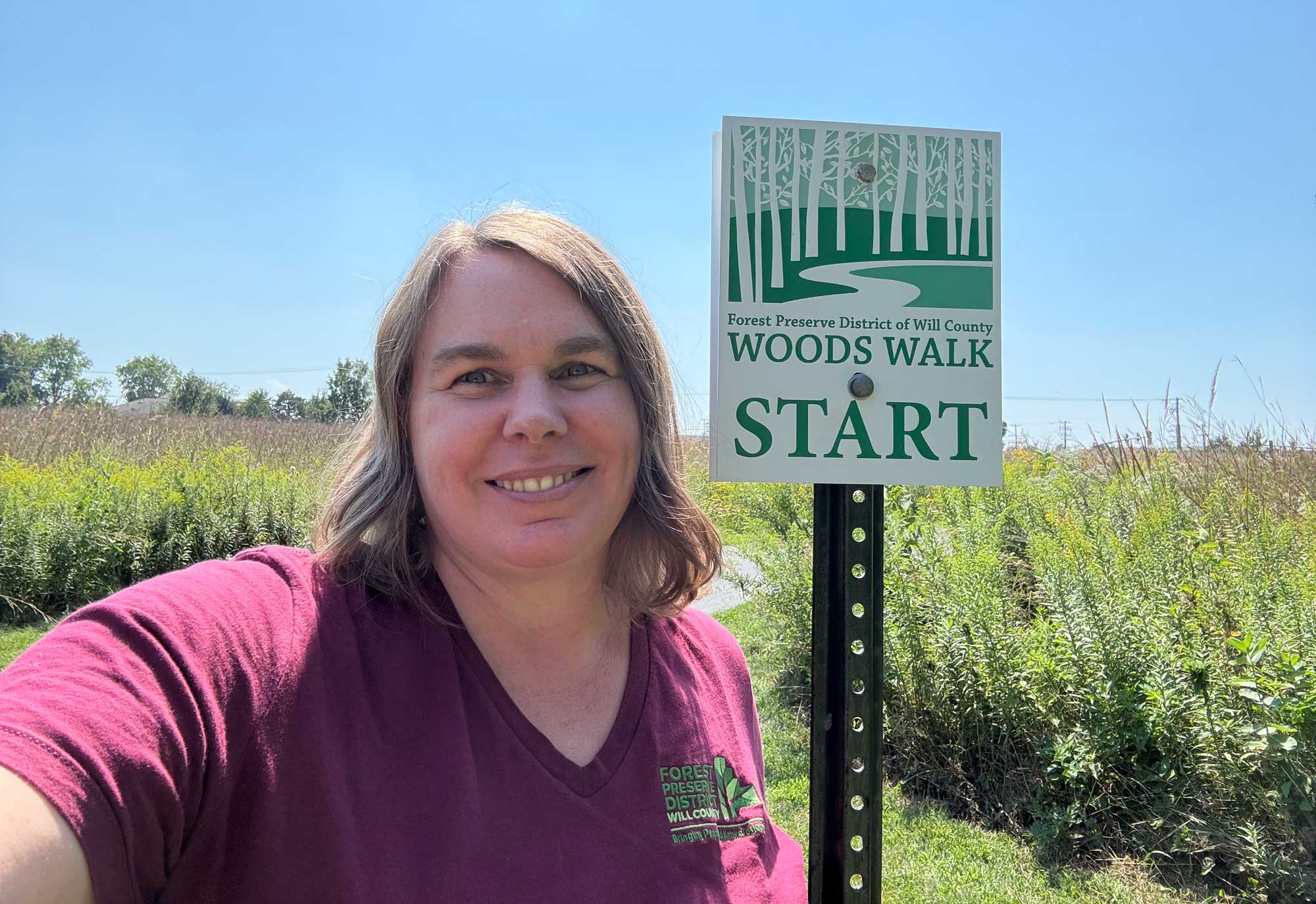
Editor’s note: We want you to Be a Trailblazer this year, so we will be hiking at various preserves throughout the year and documenting it for you. Journey along with us as we blaze a trail through the preserves and hopefully encourage you to do the same.
Those days of transition from summer to fall can be both welcome and unwanted. We’re ready for change and look forward to what’s ahead, but we’re not prepared to leave behind the halcyon days of summer.
The time of transition can be seen in nature too, especially in the prairies. As summer turns to fall, you can see color start to fade from the prairies. Many of the early season wildflowers are spent, having shed their vibrant petals. And the grasses start to fade too. The last color that still seems to shine brightly is yellow.
On our walk at Prairie Bluff Preserve, yellow was having its moment in the sun. It was yellow as far as the eye could see. The main source was all the goldenrod in bloom, but there were other golden pops of color too — gangly prairie dock plants reaching for the sun, gray-headed coneflowers in their waning days of blooming, small pockets of evening primrose peeking out among the taller plants.
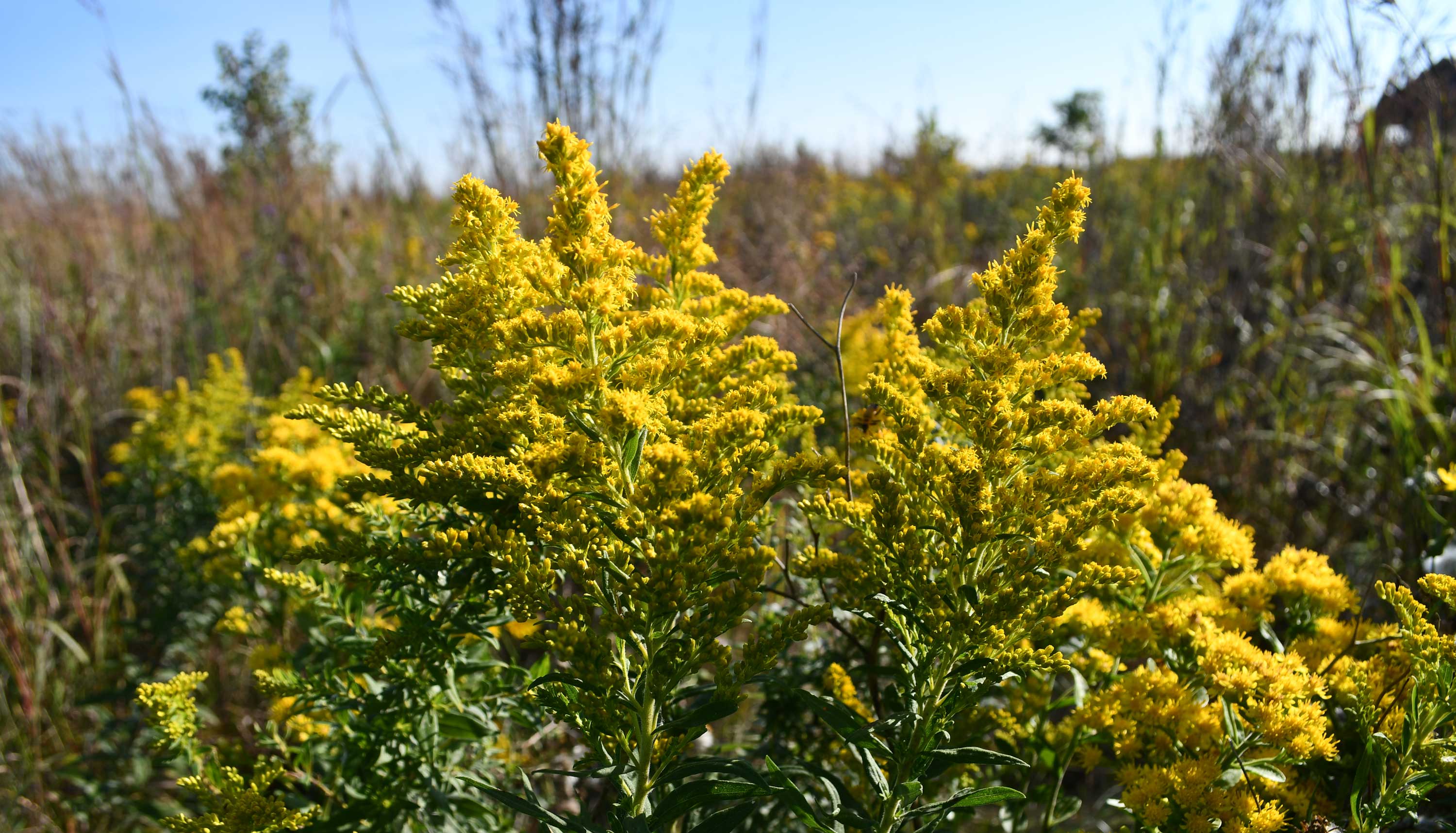
As we walked, we started to notice other pops of color too. Pockets of white from boneset and wild carrot swaying in the breeze. And there was purple too, both from clusters of purple coneflowers on their way past their prime and New England aster plants just beginning to bloom.
The yellow wasn’t just visible in the prairie plants. Insects were abuzz on our walk, and the insect we saw the most of by far was the clouded sulphur, a yellow butterfly that is common in prairies and other open spaces. These small butterflies could be seen near and far as they made their way from plant to plant.
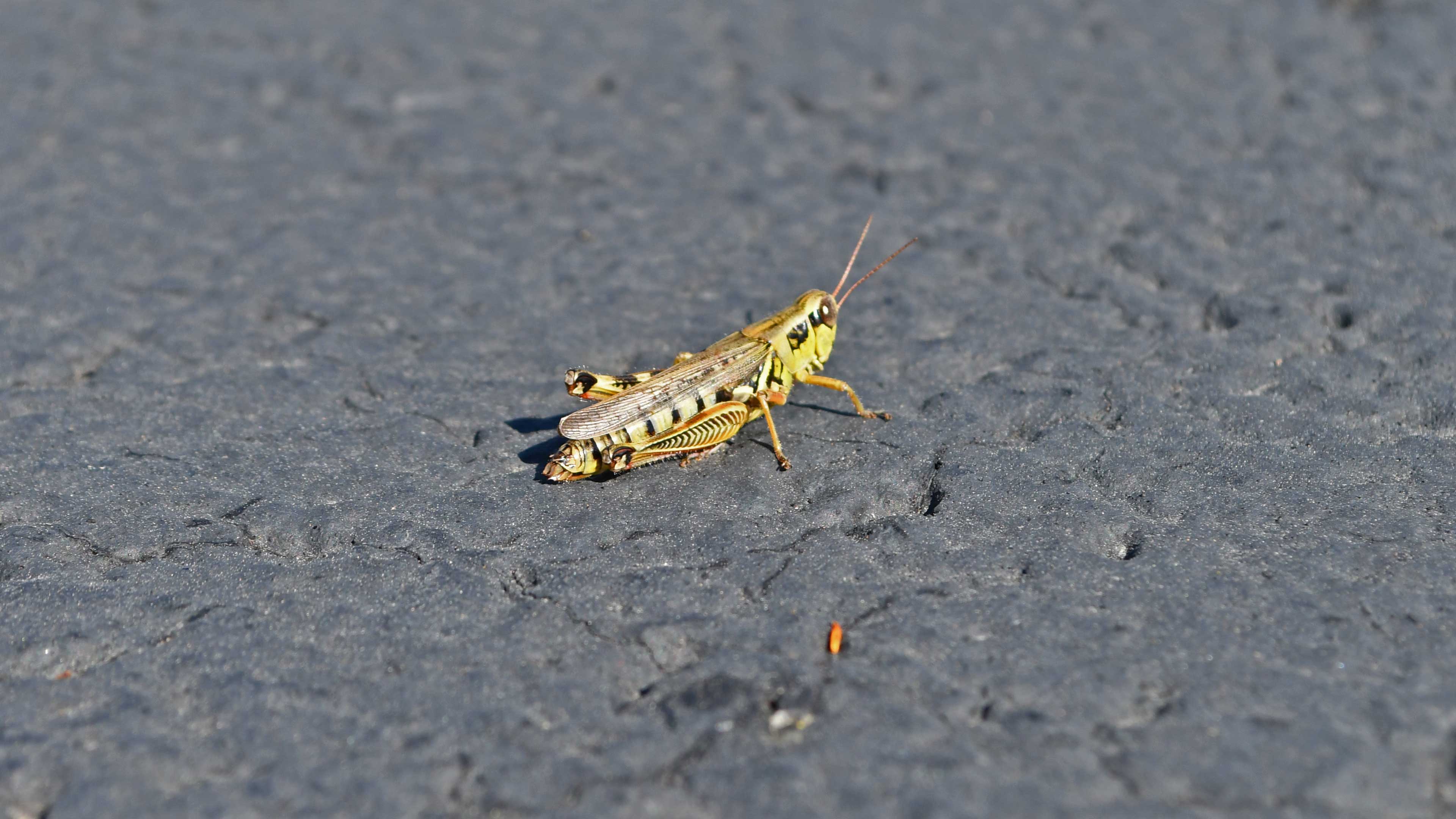
Besides the clouded sulphurs, we were happy to see a good number of monarchs. Dragonflies were buzzing around too. We had to watch our step to avoid a few fuzzy caterpillars hurrying across the trail, and grasshoppers seemed to be everywhere. Several times we followed along for quite a distance as a grasshopper hopped its way ahead us on the trail to avoid getting stepped on. One insect we were grateful not to see any of was mosquitoes. (We did have insect repellent in the car, though. It’s always best to be prepared for mosquitoes at this time of year.)
Besides insects, we saw quite a few birds in flight over the tall grasses. The birds we saw on our visit were all songbirds, but we sometimes see raptors like northern harriers and American kestrels soaring overhead here too. And a snowy owl got plenty of attention when it spent part of the winter here.
By late summer and early fall, the prairie plants have reached their maximum height, with some of the grasses and wildflowers reaching 6 feet high or taller — tall enough to sway in even the slightest breeze. At times, the tall prairie grasses even partially block the surrounding view, making it seem like you are surrounded by miles and miles of prairie.
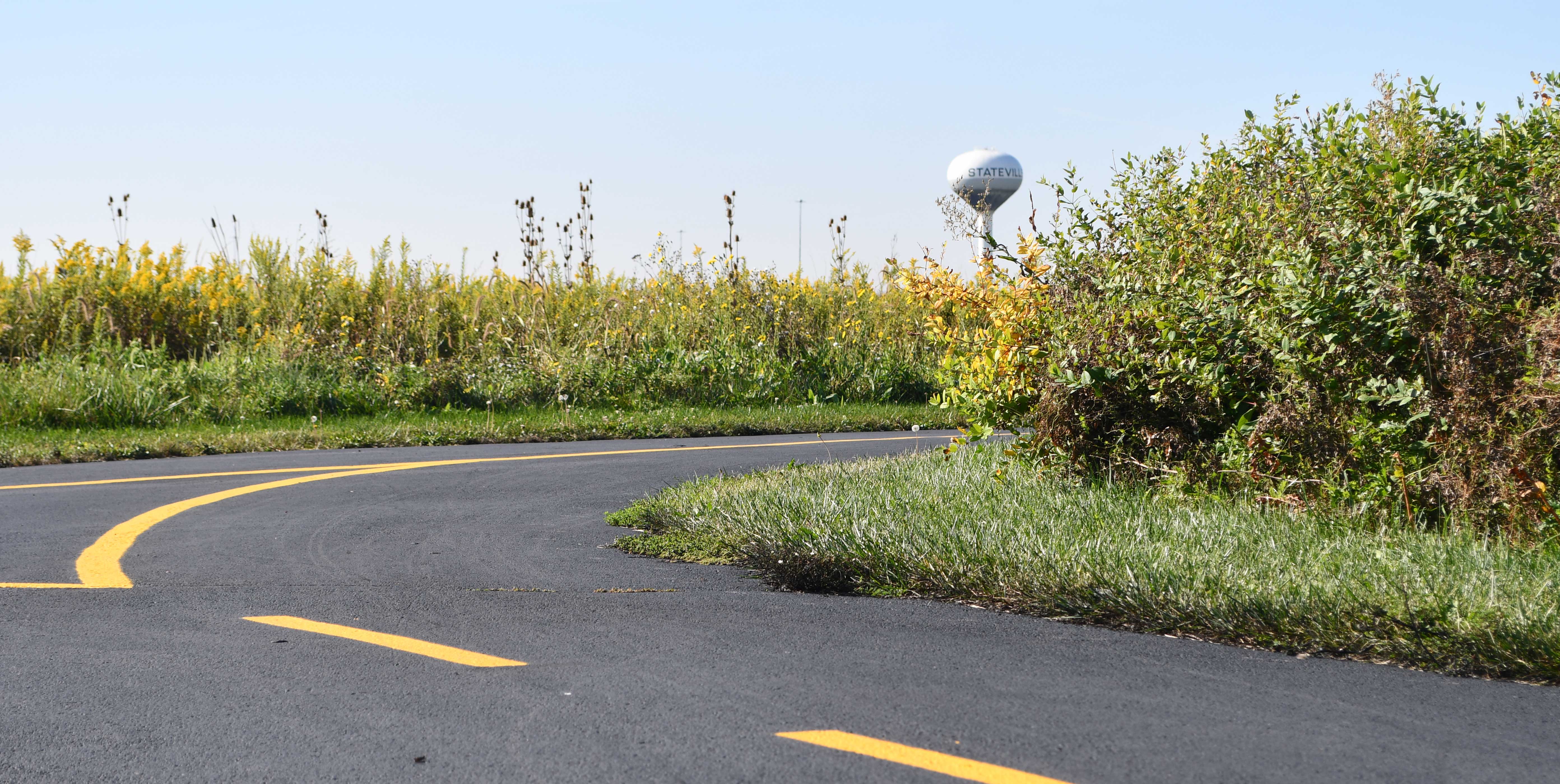
Pro tip: If you are confused about which direction to take at the traffic circles located at several points on the trail, you can use Google Maps or another map app to help you figure out which way to proceed.

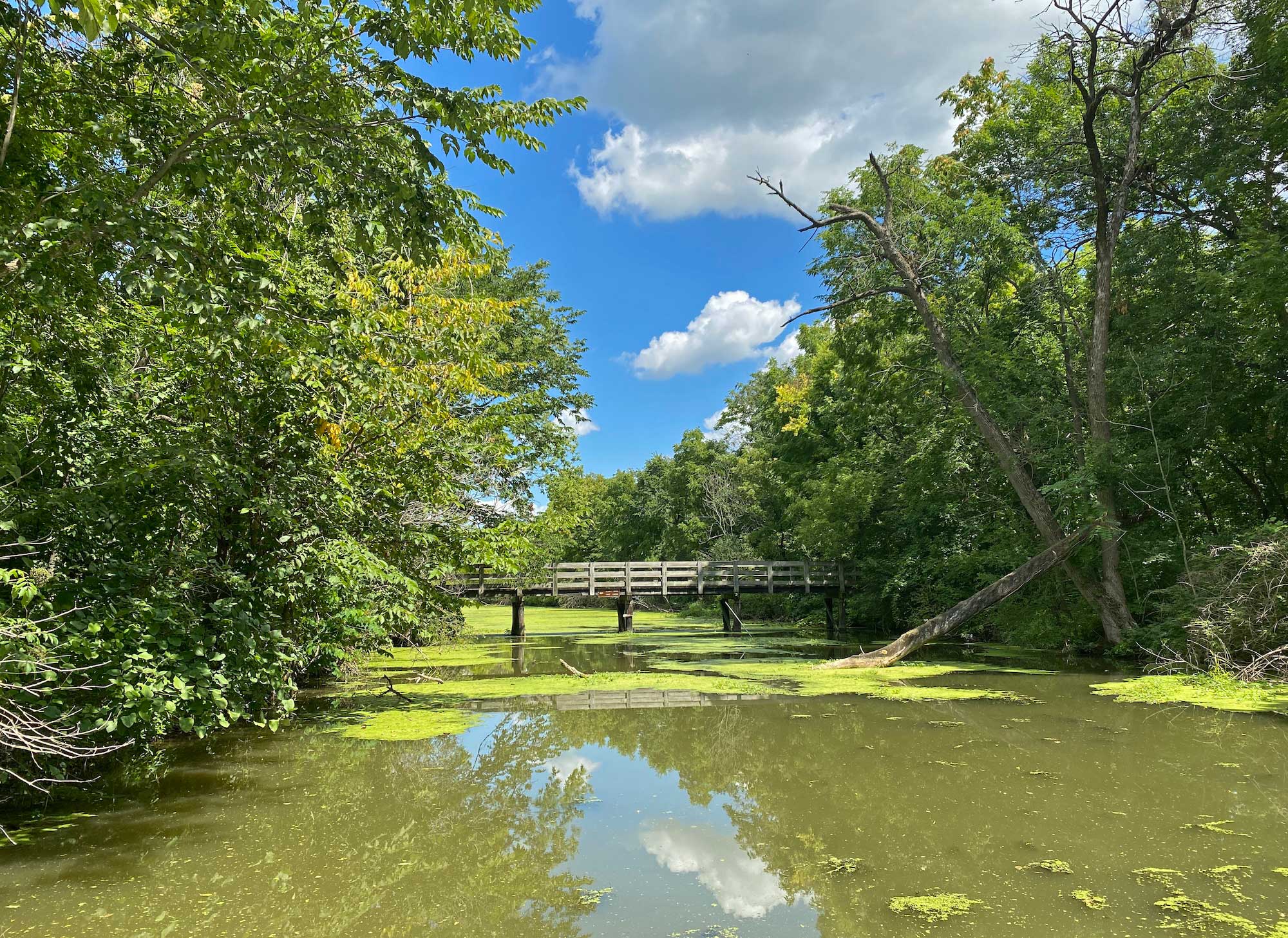
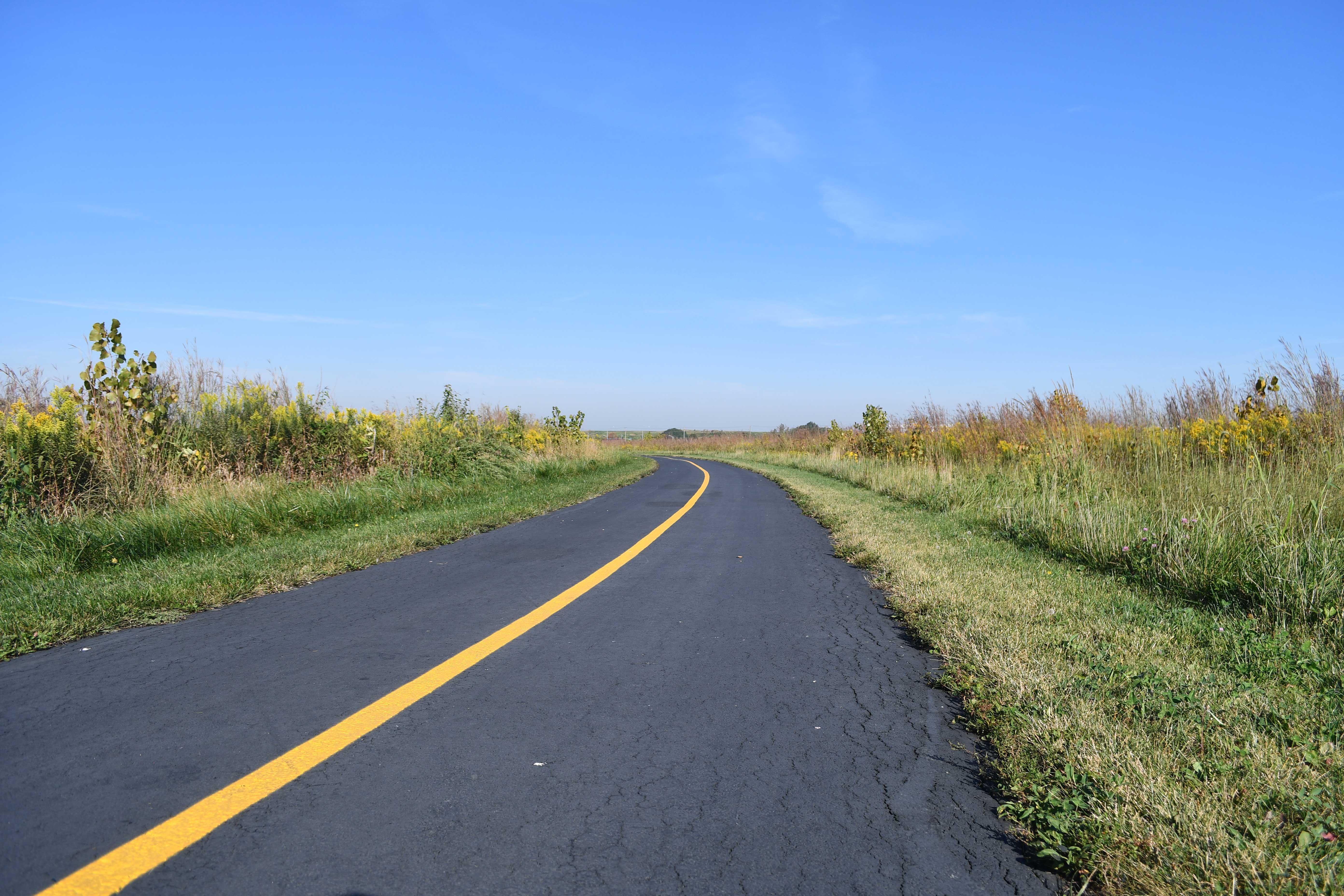
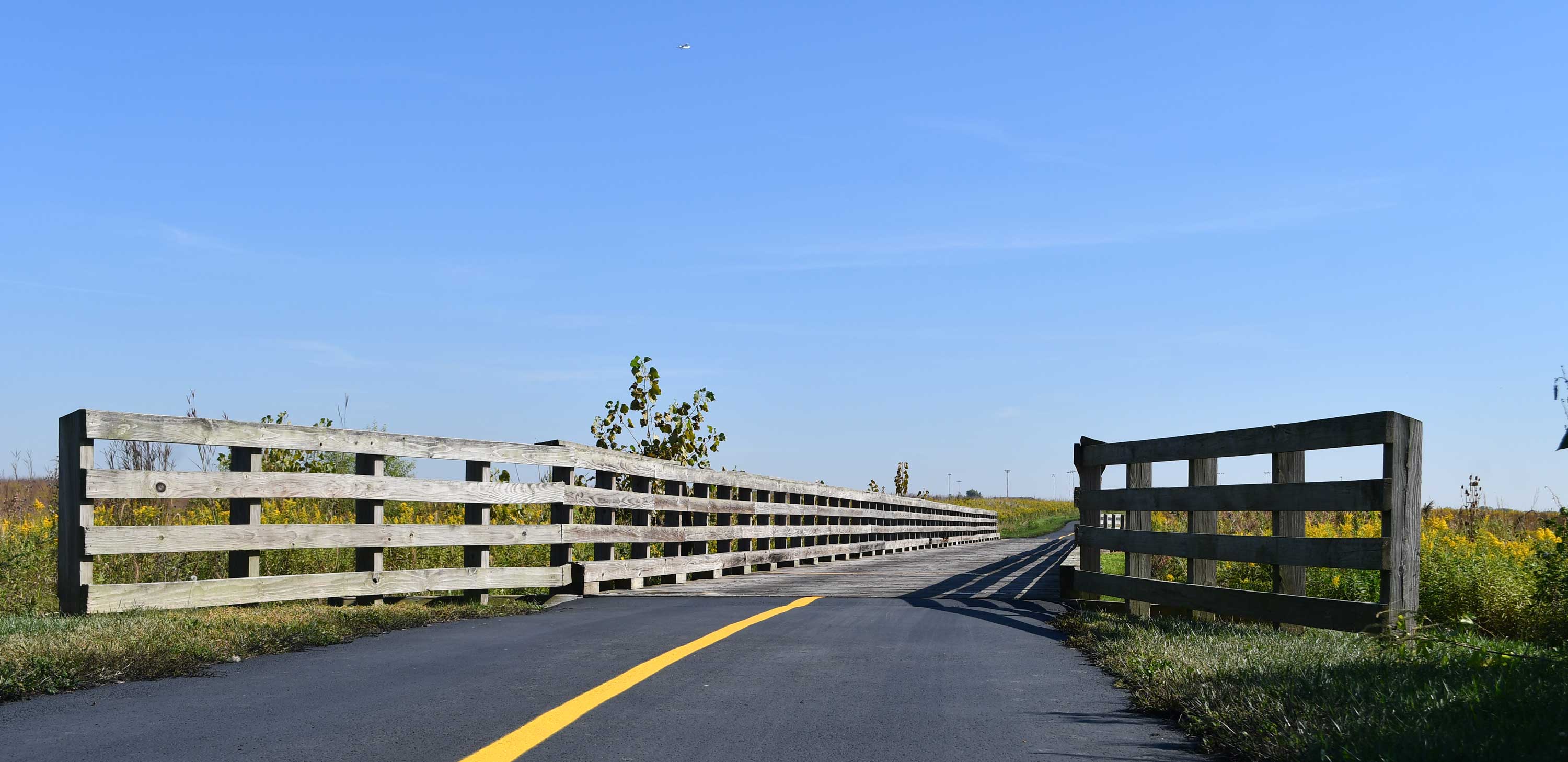
Our walk here was leisurely, but we still worked up a sweat as temperatures began to rise as the sun got higher and higher in the sky. The path here is a nice one, entirely paved with the exception of one wooden footbridge. If you’re a runner looking for new places to log some miles, doing a few laps here would be a nice change of pace. It’s also a nice place for a family bike ride because the trail is generally not very crowded and there’s no need to compete for space with road traffic.
As you walk at Prairie Bluff, you’ll be constantly reminded that this pocket of natural space is surrounded by some of the region’s hallmarks. Large warehouses are just across Renwick Road, and there is a large neighborhood to the west of the preserve. Prairie Bluff Golf Club and Hassert Park are also to the west. Lewis University’s airport is nearby, and to the south are Stateville Correctional Center and Illinois State Police District 5 headquarters.
All these varying land uses mean the sounds of nature are sometimes interrupted — by truck traffic, planes overhead or even gunfire from the police shooting range — but it is also a reminder of how critical these open expanses are. They are a place for recreation and reconnection, a way to allow us to feel far removed from the stresses of everyday life and connected with the nature that is all around us.
Just east of Prairie Bluff Preserve sits Lockport Prairie Nature Preserve, and it’s worth a stop if you have a little extra time on your visit. Like Prairie Bluff, Lockport Prairie protects grassland habitat, but it is a dolomite prairie, one of the rarest types of habitat in the world.
Dolomite is a kind of bedrock, and dolomite prairies don’t have the deep, rich soils that most prairies do because dolomite is present at the earth’s surface. That means they don’t support the same type of plants that are common in most prairies.
Lockport Prairie also includes wetland areas, and the Des Plaines River forms its eastern boundary. Because of the unique and varied habitat, you can often see wading birds, bald eagles, turtles and more on a visit.
Hiking Prairie Bluff Preserve
Route: We hiked the main looped trail. At the traffic circle where you can choose whether to walk southwest or southeast, we chose the southeast route.
Distance: 2.69 miles
Time: 55 minutes
Weather conditions: A seasonably cool and sunny late summer/early fall morning.
Difficulty level: This is a fully paved trail with minor gradual elevation changes.
Trail notes: This tends to be a quiet preserve without a lot of trail traffic, but be mindful of cyclist, joggers and other walkers as you make your way through the preserve.
Don’t forget: You’ll want water if it’s a hot day. And you’ll want to make sure to wear sunscreen because there is no shade to speak of.
(Photos by Anthony Schalk)