
What's the difference?: Lizard vs. salamander
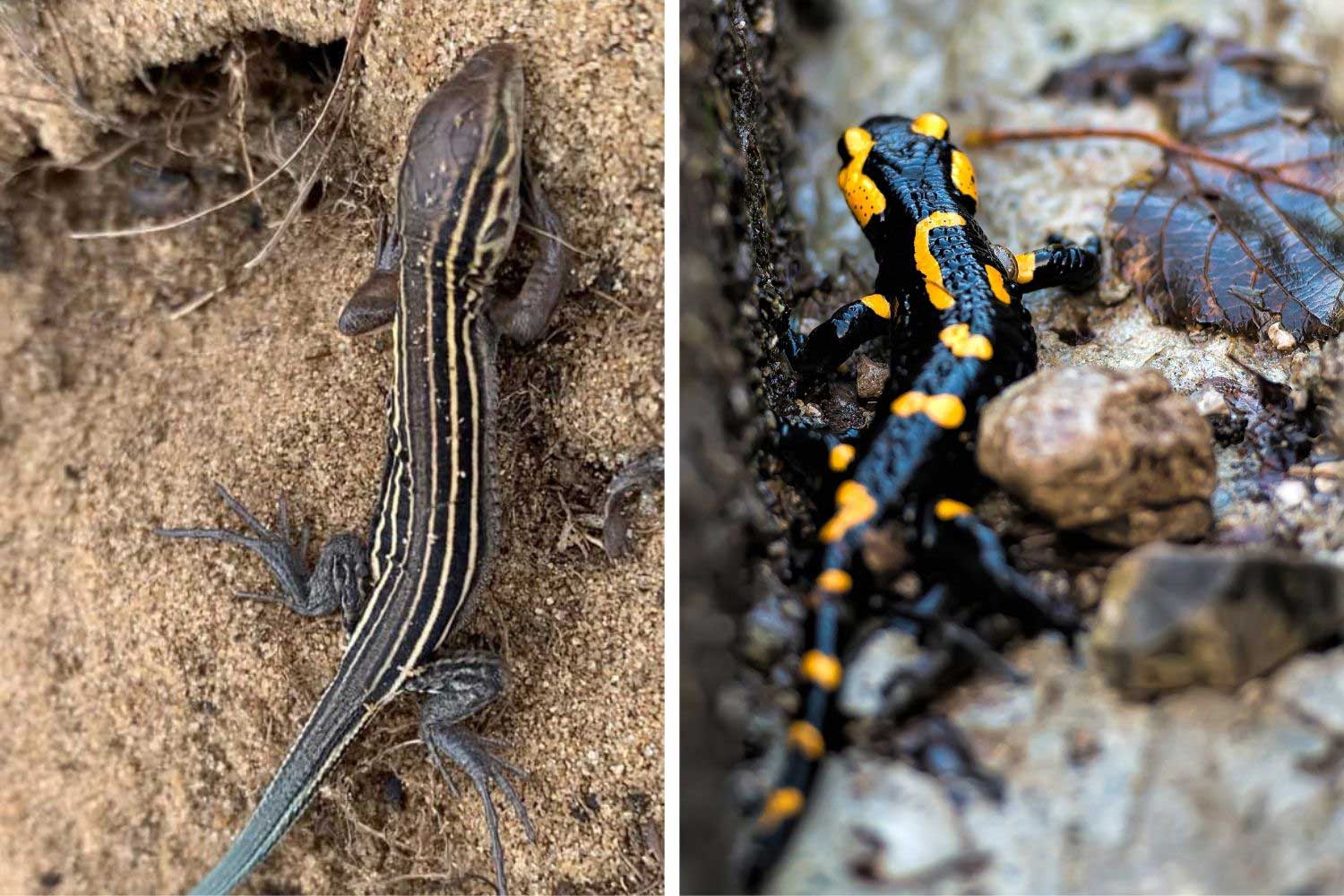
Do you know the difference between a lizard and a salamander?
From a taxonomy standpoint, the difference is clear because lizards and salamanders belong to different classes of animals. Lizards are reptiles, and salamanders are amphibians. This difference doesn't help much when it comes to telling the difference in the wild, however. Luckily, there are a few physical characteristics that can be useful.
For starters, lizards and salamanders have different skin. A lizard's skin is dry and scaly, while a salamander's is usually smooth and moist, according to the Burke Museum. The differences in their skin are useful based on the environments where they typically live. Salamanders live in moist or wet places or in water, so they have wet skin. Lizards, meanwhile, typically live in dry environments and their scales help them retain water.
If you can get a close look, check out the ears and claws — or lack thereof — for more useful identification clues. Lizards have external ear openings on the sides of their heads, but salamanders do not, according to the National Aquarium. Lizards that have legs (there are legless lizards!) have claws on their toes, but salamanders don't have claws.
Besides the physical differences between these somewhat similar-looking animals, there are some behavioral differences as well. One such difference is in when they are active throughout the day. All salamanders are nocturnal, but most lizards are diurnal, or active during the day, according to the aquarium.
How they breathe is different as well. Lizards are terrestrial — they live on land — so they breathe with their lungs, like we do. Salamanders, however, don't all have lungs for breathing like many other animals do, the National Aquarium reports. While some salamanders have lungs, they all are able to respirate through their skin and the lining in their mouths. Some salamander species are entirely aquatic — they spend their full lives in water — and they have gills that allow them to "breathe."
Another key difference between lizards and salamanders is how they reproduce, and this difference comes down to the difference between reptiles and amphibians. Lizards, as reptiles, lay eggs with leathery shells, and most bury their eggs in soil or sand, although a few lizard species give birth to live young, the Purdue University Extension reports. Like other amphibians, salamanders lay their eggs in water. Larvae hatch from the eggs and then will undergo metamorphosis, at which point the salamanders move onto land. (But remember, some salamanders spend their entire life in water.)
There are dietary differences between lizards and salamanders as well but they are not absolute. All salamanders are carnivores, with most eating worms, insects and other invertebrates. However, lizards have varied diets, the National Aquarium reports. Some lizards are strictly herbivores or carnivores while others are omnivores.
Locally, there are species of both lizards and salamanders that live in Will County. Let's start with our local lizards. Illinois is home to eight lizards, two of which live in Will County. Remember we mentioned there are legless lizards? Well, one such legless species — the slender glass lizard — prefers the loose, sandy soils that can be found in southern Will County. Our other local lizard species, the six-lined racerunner, prefers a similar habitat.
Illinois is home to more salamander species than lizards, with 20 different species of salamanders found across the state. Many salamander species have only a small range in Illinois. Of the 20 salamanders in Illinois, Will County is included in the range for eight of them: the blue-spotted salamander, eastern tiger salamander, four-toed salamander, mole salamander, mudpuppy, southern two-lined salamander and spotted salamander.