
Nature curiosity: Why do some trees not lose their leaves?
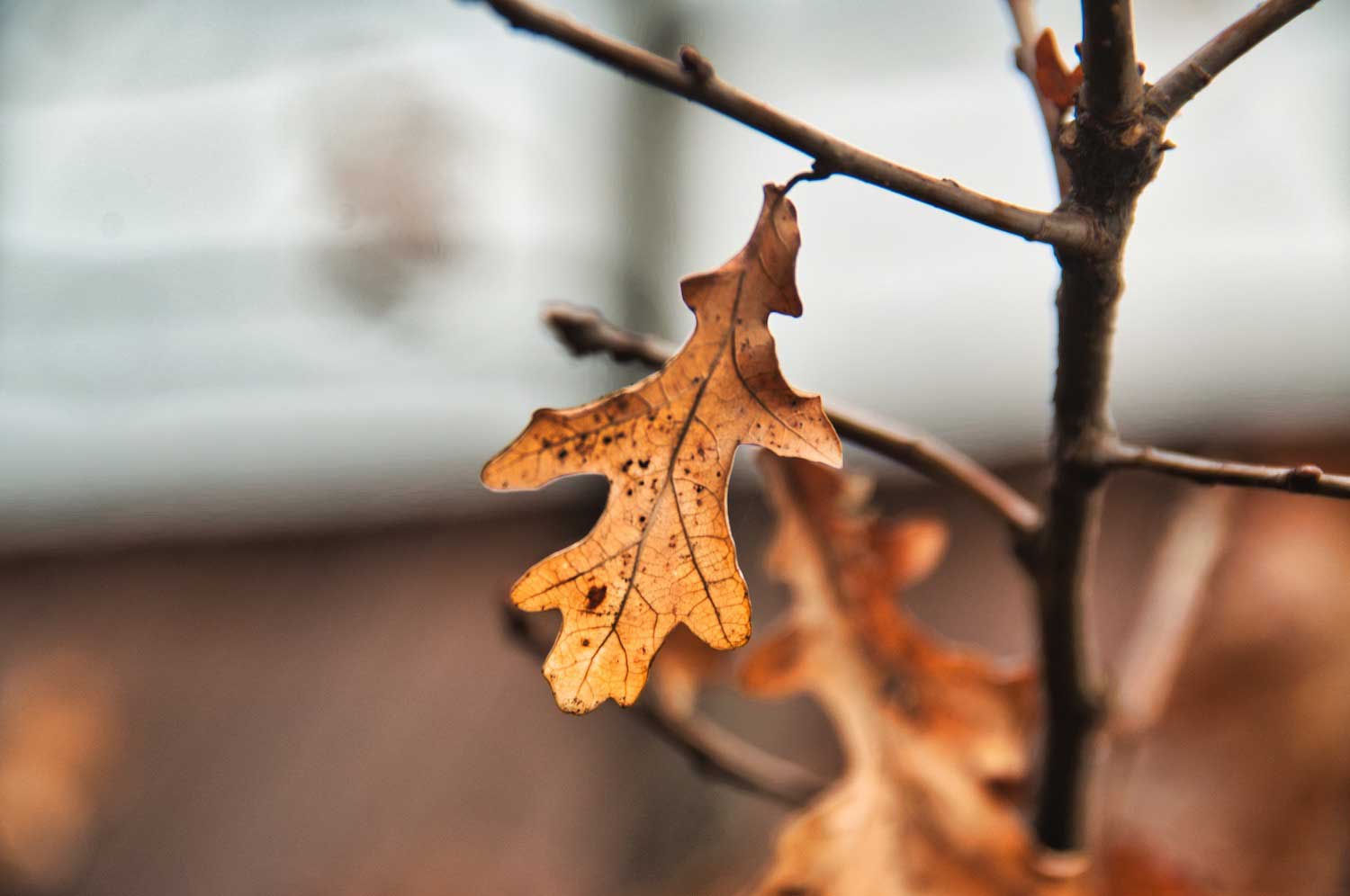
As the seasons change, we come to expect certain things in nature. As we look forward to spring, we see buds on trees and shrubs. As spring starts to creep along, we look for ephemeral wildflowers on the forest floor. Then suddenly the trees leaf out and the world is green as far as the eye can see. By the time fall starts to make its presence known, we are ready for the leaves to drop so the cycle can begin once again.
But not all deciduous trees seem to get the memo when it comes to losing their leaves. Most shed them all by the time winter sets in, but a few trees hang onto them, their leaves surviving even the fiercest of winter storms.
These leaves that just can't seem to let go get the first part of the equation right. The leaves' green color fades, but that's where the process stops. Those leaves never seem to fall.
Trees that do not lose their leaves are said to be marcescent, and it is most common among certain kinds of trees. In Illinois, oak trees and beech trees are among those that exhibit marcescence. It is most commonly seen in younger trees rather than fully mature trees, the University of Illinois Extension reports. These withered brown leaves don't last forever, though. When spring sets in, the leaves will finally fall.
Normally, trees shed their leaves when the structure that connects the leaf to its plant, called the petiole, forms a cluster of cells that allow that plant and leaf to separate from one another, according to Harvard University's Arnold Arboretum. This spot is called the abscission zone, and for most trees, the abscission zone is activated in fall. But for marcescent trees, the activation is delayed until spring, just before the tree's new set of leaves begin to emerge.
The reason for the delayed timing is a mystery, but there are a few theories. One is that keeping their leaves may prevent browsing on the tree by wildlife, giving young trees a greater likelihood of surviving to maturity, the Extension reports. This also explains why trees outgrow marcescence as they mature.
Retaining their leaves through winter may also be a way for the deciduous trees to compete with their evergreen neighbors in areas where the soil lacks sufficient nutrients. Evergreen trees typically fare better in these environments, so marcescence may be a survival strategy in less-than-optimal conditions.
Speaking of those evergreen neighbors, do they lose their leaves? They do, but it's quite different than how deciduous trees lose their leaves. For starters, the leaves on conifer, or evergreen, trees are needles. And evergreen trees do shed needles every year, but they don't shed all their needles at once like deciduous trees.
Evergreen trees add new green needles each year, and those new needles replace older needles, the University of Georgia College of Agricultural and Environmental Sciences reports. Just like with leaves, the old needles will turn yellow or brown before dropping.
When evergreen trees will drop their leaves/needles varies. Most pine trees shed needles in the fall, but junipers tend to lose theirs in late summer or early fall. And some evergreen trees may lose needles in spring or early summer.
How long needles last can vary as well. While leaves on deciduous trees last just one year, many evergreen trees keep their leaves for three years, the University of Georgia reports. Some junipers can keep theirs for a decade or even longer!