
Five fast facts about secretive salamanders
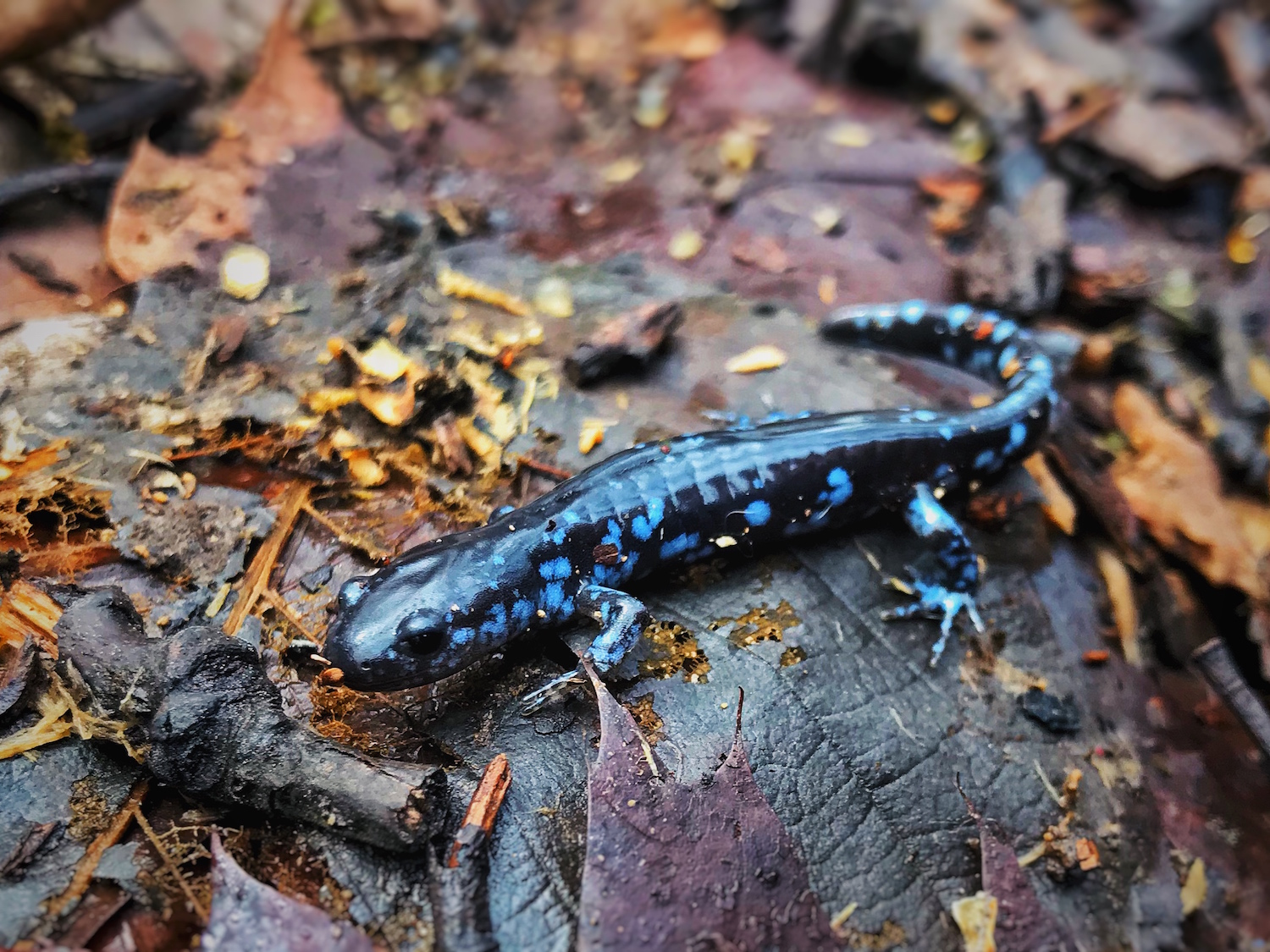
What looks like a lizard but isn't? A salamander. Although salamanders share some physical characteristics with lizards, they have plenty of differences. They aren't even closely related. While lizards are reptiles, salamanders are amphibians, like frogs and toads. Their feet are different too, because salamanders have four toes on their front feet while lizards have five.
The salamander family includes about 600 species across the world. Of these, 20 live in Illinois, according to the Illinois Department of Natural Resources. They are mostly nocturnal and spend their days hidden away in cool, damp places.
There's a lot of variation among salamanders, and sometimes they go by other names as well. Some are called mudpuppies, olms or waterdogs, the San Diego Zoo reports. Axolotls, which some people keep as pets, are salamanders. Newts are salamanders that spend most of their time on land, while sirens are salamanders that have lungs and gills and don't usually develop past the larval stage of life.
With so much variation, it's hard to speak about salamanders in generalities, according to the San Diego Zoo. Some have four legs, but some only two. Some lay their eggs on land, some lay their eggs in the water. Even their life cycles can vary.
They can regenerate body parts
It might sound like something from a science fiction movie, but most salamanders can regrow some of their body parts if they lose them, according to the Smithsonian National Zoo and Conservation Biology Institute. This doesn't just apply to their feet and tails. Some salamanders can regenerate brain and eye tissue. The axolotl, a critically endangered salamander that lives only in Mexico, can even regenerate its heart and spinal cord. Scientists are studying how salamanders can regenerate body tissue so effectively in hopes that it may help humans who have lost limbs or who have Alzheimer's disease.
Regrowing a lost limb or tail isn't necessarily a quick process. A salamander that loses its tail — maybe to a predator on the hunt for a meal — may take a year or two to fully regrow it, the Illinois Department of Natural Resources reports.
While most animals can't regenerate lost body parts, salamanders aren't the only ones with the ability. Many worms can regrow their body parts, and crayfish and other arthropods can regrow their claws, Treehugger reports. Sea stars, which you may know as starfish, can grow back their arms. And impressively, skinks can intentionally release their tails to escape being caught by a predator and then regrow it.
They need moisture to survive
Most salamanders have smooth, moist skin, and they need it to stay moist to survive. This is why they prefer dark and shady spots, like under rocks and logs or in burrows they dig into the ground, the San Diego Zoo reports. There are even some species that spend their entire lives in damp, dark caves.
Many species of salamanders require a body of water like a pond or a vernal pool to complete their life cycle because they lay their eggs in water. Some kinds of salamanders prefer water so much they never leave it. Axolotls, olms and sirens all spend their full lives in water, the zoo reports.
As is common in nature, there is an exception to the rule when it comes to salamanders preferring moist habitats. The Kaiser's spotted newt lives in the Zagros Mountains in Iran, where it is only wet for a few months a year, according to the San Diego Zoo. The newts here emerge and mate during the rainy season in spring and then burrow into the soil and spend the rest of the year underground in a state of torpor.
They "breathe" through their skin
Most salamanders have lungs, but they don't use them to breathe like we do. Instead, they "breathe" through their skin, which is an important reason why their skin must remain moist, according to the IDNR. Salamanders absorb oxygen through their skin and then respirate carbon dioxide through their skin as well. Because having moist skin is critical for their respiration, they have glands in their skin that secrete a mucus to keep their skin from drying out.
Salamanders can absorb compounds and other elements besides oxygen through their skin as well, according to the National Zoo. Because of this, they are extremely sensitive to toxic substances and pollution. They will be among the first species to disappear from an ecosystem if it becomes polluted because they cannot survive in such conditions.
They know how to defend themselves
Many salamander species are an important part of the food web and are a food source for other animals — birds, reptiles and mammals. Because they are commonly hunted, they have defense mechanisms that help them avoid predation. Their main line of defense is poisonous and foul-tasting skin secretions that make them an unappetizing catch, the IDNR reports. In the case of the eastern newt, the skin secretions may cause the predator to vomit, allowing the newts to escape.
Certain species have also adapted other means to keeping predators at bay. Dusky salamanders are fast runners and can leap to avoid being caught, while the red-backed salamander will coil itself with its head protected, revealing a tail covered in foul secretions, IDNR reports. Tiger salamanders can use their tails to flip the dangerous secretions on an attacker's face, while the aptly named slimy salamander will smear predators with sticky skin secretion to help them avoid being caught.
Even the bright colors of some salamander species work as a deterrent. Predators who see in color will learn to associate the colors of the salamanders with the foul-tasting secretions they emit, and they will learn to avoid them to prevent becoming sick or to simply avoid a bad-tasting meal, according to the IDNR.
They are hunters too
All salamanders are carnivores, so hunting is an important part of their survival, according to the San Diego Zoo. Many predators are quick — quick on their feet, quick in the air or quick to move across the ground — but salamanders move around pretty slowly. That means they can't easily hunt fast-moving creatures. Instead, they eat a lot of slow-moving animals like worms, slugs, snails and crayfish. Some will also eat small rodents such as mice and shrews.
One thing salamanders have in common with many other carnivores is sharp teeth. Just like our more familiar predators, salamanders snatch their prey with their sharp teeth. Some also have long tongues that they can stick up to catch a meal, the zoo reports. In some cases, they may lay in wait and then snatch up an unsuspecting animal as it passes by. They will also sometimes slowly creep up on a potential catch and then pounce on it.