
Five facts about misunderstood coyotes
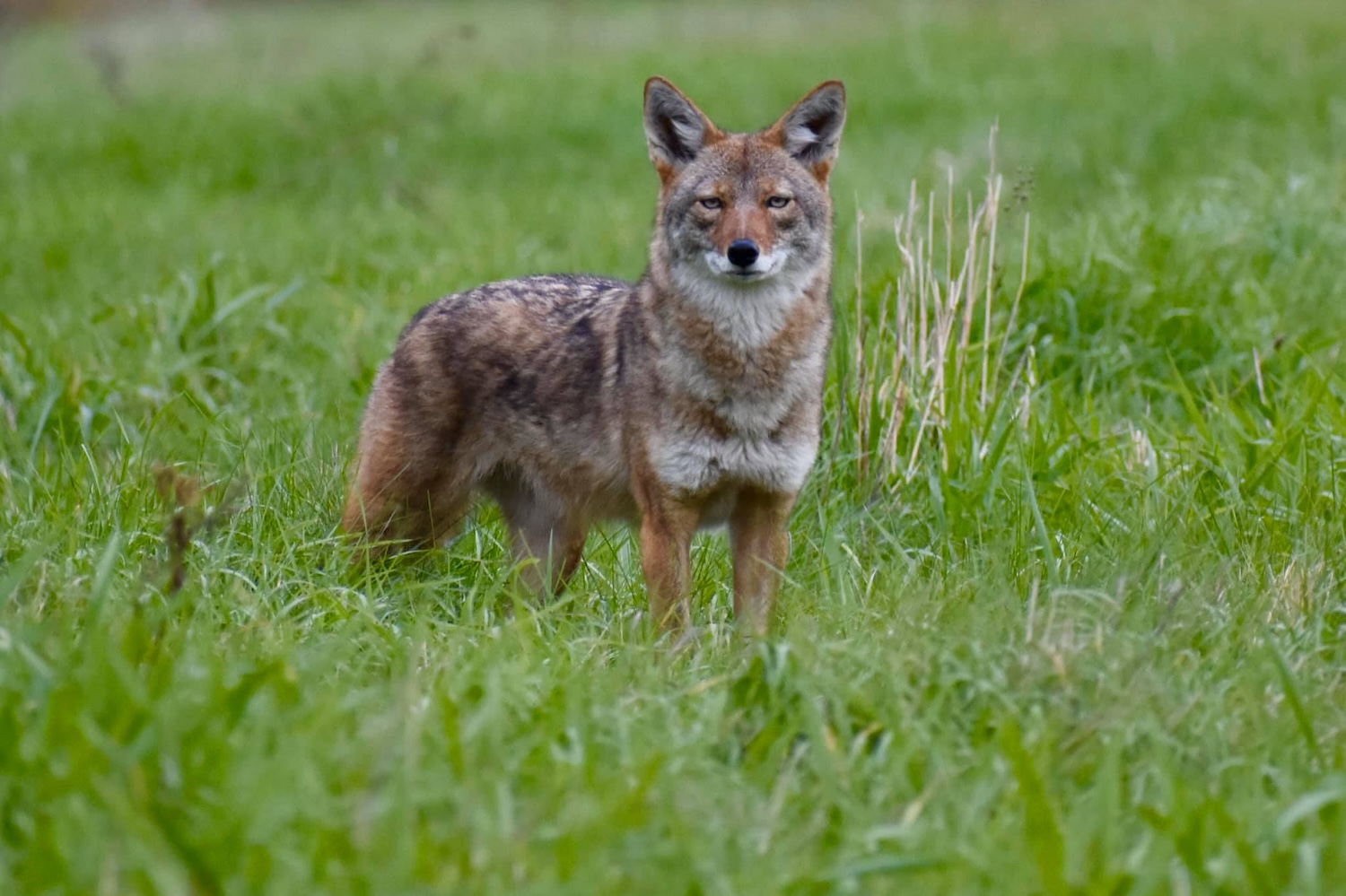
Many people don't welcome the sight of a coyote in their neighborhood, but they are an important part of the ecosystem and their presence across Illinois is beneficial. Their main ecosystem role is keeping the population of small mammals like rodents and rabbits in check, according to Wildlife Illinois.
At first glance, you might confuse a coyote for a dog. They are about the size of a medium-sized dog, with fur ranging in color from gray to yellowish-gray or brownish-gray. Their tails are bushier than most dogs, and their noses are more pointed too, Wildlife Illinois reports.
In Illinois, coyotes are common and their population is increasing. They prefer open areas with a mix of grasslands and woodlands, but they can live in every type of habitat, including cities, Wildlife Illinois reports. They are considered nocturnal, but it's not considered abnormal or cause for concern if they are seen during the day, according to Wildlife Illinois.
Here are a few tips for coexisting with coyotes from Wildlife Illinois:
- Do not leave small pets unattended when they are outside, especially at night.
- Do not feed coyotes or any other wild animals and remove or secure unintentional food sources such as fruit, pet food, bird seed and garbage around your home.
- Do not run if a coyote approaches you. Instead, yell, stand up straight and wave your arms to help yourself appear larger. If you can, throw something in the general direction of the coyote to make it move away. Use care not to injure the coyote.
They are at the top of the food chain
In northern Illinois today, coyotes are an apex predator, an animal that no other animal preys on. They mostly hunt small animals such as mice, voles and rabbits, but they will also sometimes prey on fawns, according to Wildlife Illinois. We think of coyotes as carnivores, but they are omnivores. While they do hunt a lot of small animals, they also eat fruits, berries and other plant matter when they are available. They will also eat carrion and scavenge in garbage or look for food sources around homes and businesses.
Because they hunt small animals, people often believe coyotes are a threat to small pets such as cats and dogs. Coyotes do not usually pose a risk to pets or people when given their space, but it is always a good idea not to leave small pets unattended outdoors, particularly at night, Wildlife Illinois advises. In addition, make sure your garbage cans are well secured and pet food and bird seed are not easily accessible.
Coyotes have not always been the largest predator in Illinois. In the 1800s, wolves and cougars were at the top of the food chain, but those animals have not been regularly present in Illinois for many decades, Wildlife Illinois reports.
They are highly intelligent
Coyotes are considered highly intelligent and are able to learn quickly, according to Project Coyote. Their intelligence makes them adaptable and able to survive and thrive in a variety of habitats, from rural to urban areas. However, it's their intelligence that also sometimes gives them a bad reputation among humans. They are able to learn patterns and will take advantage of easy and reliable food sources, and that could include things around your home like unsecured pet food and garbage cans.
Studies have even found that coyotes look both ways before crossing the street. A wildlife ecologist from Ohio State University has seen video recordings of coyotes in Chicago that are being studied stopping to look before crossing a street.
One unusual way that some coyotes demonstrate their intelligence is by pairing up with badgers to hunt together, according to Animal Diversity Web. This unlikely partnership is beneficial to both animals because each has skills the other lacks. Coyotes are able to give chase to prey, while badgers use their digging skills to go after animals that escape underground.
They communicate in many ways
Coyotes are known for their piercing howls, but that is just one of the many vocalizations they use to communicate. They will also bark, growl, huff, whine and yip, with each vocalization having a different meaning, according to the Urban Coyote Research Project. Growling can be a threat, for example, while barking might be used as a signal to other coyotes in the pack.
Howling among coyotes can have different meanings. Sometimes they howl to call to their pack while they are hunting alone, or they might howl to signal other coyotes or other animals that they are nearby. They even sometimes howl together when they return from a hunt. Much like people can tell a person by their voice, coyotes can differentiate among the members in their pack by their howl.
Aside from vocalizations, coyotes have other ways to communicate both with animals in their pack and coyotes not in their pack. They will scent mark with their urine, leaving it on rocks, posts, trees, bushes and more to mark their territory and alert other animals to their presence.
They mate for life
Coyotes form strong bonds, and once a male and female partner up they will mate for life, the Urban Coyote Research Project reports. If the male or female of a pair dies, the surviving coyote may select a new mate, but otherwise the couple will typically remain together.
In Illinois, coyotes usually mate in late February or early March, according to Wildlife Illinois. In packs, only the alpha pair mate. The other adults in the pack will help raise the pups. Most litters will have six or seven pups, and they are usually born in late April or May.
Coyotes only use their dens during pupping season. The babies stay inside the den for a few weeks after being born and then will begin to venture out to play for increasingly longer stretches. The pups will start learning to hunt when they are 2 or 3 months old. Most of the litter will venture off on their own by fall, but a few will stay with the pack to help raise the pups born the following spring.
They have active social lives
Coyotes are highly social animals and have a complex and well-organized social system, according to the Urban Coyote Research Project. Some coyotes will live in packs, while others will live alone for at least part of their lives. A pack will usually consist of an alpha pair along with a few other coyotes. Within packs, most members will be close relatives except for the alpha pair.
Packs of coyotes will establish and maintain their territory while also defending it from other coyotes. They typically only defend their territory during pupping season. While the pack often remains in close proximity, it is common for them to go off on their own or in pairs to hunt.
Solitary coyotes can be either male or female. They are usually younger coyotes, but not exclusively. Typically, solitary coyotes have left a pack and are looking to join a new pack or establish their own pack or territory, the Urban Coyote Research Project reports.